 |
Welcome To Evlithium Best Store For Lithium Iron Phosphate (LiFePO4) Battery |
 |
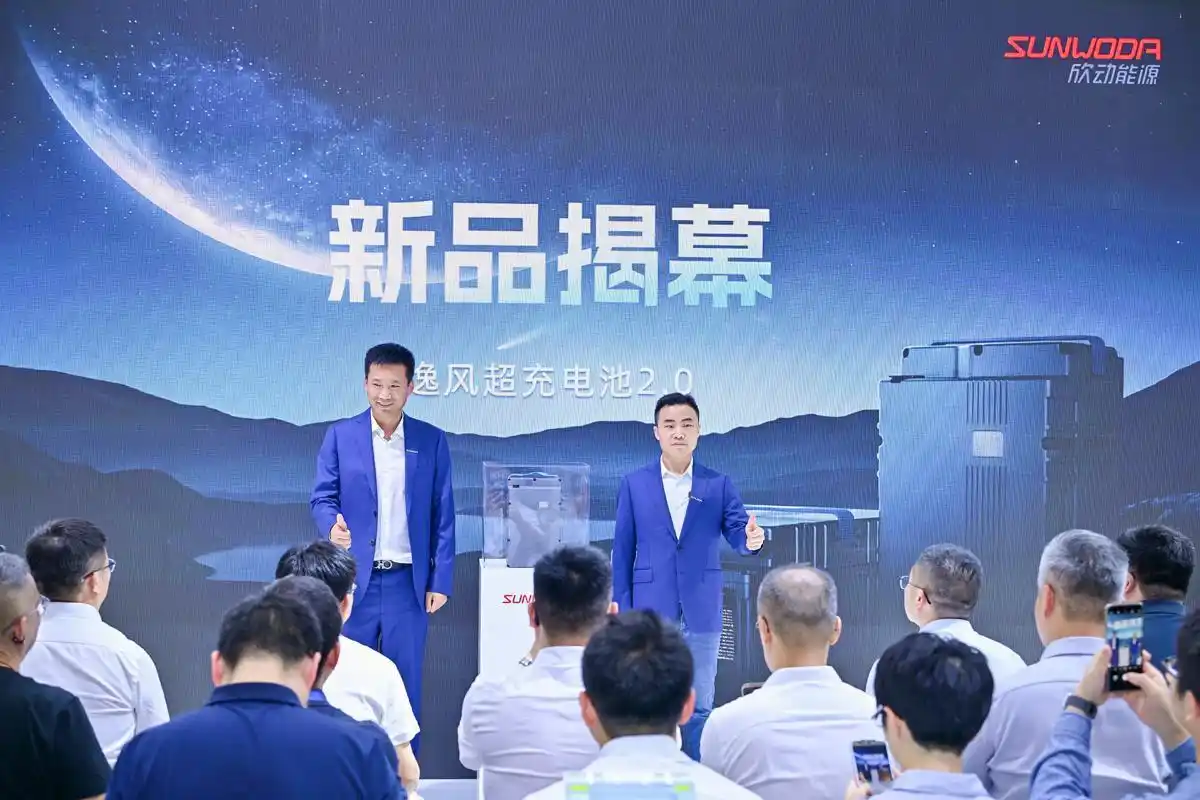
At the CIBF battery exhibition in Shenzhen on May 13, Xindong Energy — the small-power battery subsidiary of listed Chinese battery maker Sunwoda Electronic — formally unveiled the Yifeng Super-Charge Battery 2.0 and simultaneously launched the Light Power Super-Charge Alliance, a coalition of more than ten electric motorcycle brands and charging-infrastructure operators including Tailg and Moshou.
The dual announcement signals a deliberate attempt by Xindong to shift the competitive axis in China's two-wheel EV segment away from energy density alone and toward charging speed — a capability the company argues has been systematically neglected by an industry still largely locked in a "slow-charge era."
The global motorcycle fleet now exceeds 680 million units, yet the charging experience for electric riders has evolved little since the first wave of e-bikes arrived in Chinese cities. Industry research cited by Xindong indicates that mainstream two-wheel battery packs on the market today support charge rates of only around 0.3C, translating to full-charge times of three to eight hours — a poor fit for the short, frequent, time-sensitive trips that define urban mobility in 2025.
The gap between rider expectations and available technology has created an opening for a performance-oriented challenger. Xindong is positioning the Yifeng 2.0 as that challenger, framing the product launch not merely as a component upgrade but as a platform shift: from batteries that happen to be rechargeable, to batteries engineered around the refueling event itself.
Under matched super-fast charging equipment, the Yifeng 2.0 accepts up to 6 kW of continuous input power, enabling an 80% state-of-charge in roughly 20 minutes — a charging rate the company describes as leading within the current two-wheel battery segment. The pack uses a standardized module form factor and connector interface designed to fit more than 90% of mainstream vehicle platforms.
The design also supports rapid hot-swap battery replacement in both horizontal and vertical orientations, preserving cabin storage space that fixed-pack architectures typically sacrifice. Xindong says the Yifeng 2.0 has completed technical compatibility testing with several leading domestic electric motorcycle brands and regional manufacturers, and is currently in a small-volume production ramp. Pilot deployments have already started in Hangzhou and select other cities.
The Alliance aims to establish shared fast-charging standards, interoperable infrastructure, and joint pilot programs across urban markets in China.
Battery engineers have long characterized fast-charging, long cycle life, and safety as an "impossible triangle" — improving one metric tends to degrade the other two. Xindong claims the Yifeng 2.0 resolves this tension through a three-layer technical overhaul spanning cell architecture, thermal management, and charging algorithms.
Proprietary all-tab 46mm large-format cylindrical cells using a cut-stack full-tab process. Combined with Sunwoda's automotive-grade supercharge material system, the design minimizes internal resistance and shortens electron and ion transport paths, reducing Joule heating at the source.
Three concentric cooling layers: high-conductivity electrode materials and embedded thermal adhesive at the cell level; phase-change materials plus polymer thermal composites with a magnesium alloy shell at the module level; a full-array temperature sensor network at the system level that responds in milliseconds and holds cell temperature variance within 2 °C.
An onboard algorithm continuously monitors state of charge, temperature, and health across multiple dimensions, dynamically adjusting voltage slope and current curves to control lithium-ion intercalation rates — suppressing lithium plating, the main mechanism by which fast charging degrades cells over time.
Xindong reports that the combined effect of these three innovations yields a cycle life of more than 2,000 charge-discharge cycles — materially above the 800–1,200 cycles typical of conventional two-wheel batteries — at a projected service life of five years. The company says the result closes the performance gap between consumer e-moto batteries and the vehicle-grade cells found in passenger EVs.
Hardware alone rarely changes an industry standard. Xindong appears to understand this: the simultaneous launch of the Light Power Super-Charge Alliance is designed to create the demand-side infrastructure that makes the Yifeng 2.0's capabilities commercially meaningful. Without fast chargers at scale, a battery capable of 6 kW input is no faster than a conventional pack.
By recruiting OEM partners and charging-station operators at the point of product launch, Xindong is attempting to short-circuit the classic chicken-and-egg problem that has stalled previous fast-charging initiatives in the two-wheel sector. Whether the coalition can maintain coherence — and whether it will open its standards to non-founding members — will be a key factor in determining whether the Yifeng platform achieves broad market penetration or remains a niche premium option.
The launch positions Sunwoda as a vertically integrated fast-charging ecosystem player in a market segment that larger cell makers have historically treated as low-priority. If adoption accelerates, it could pressure incumbent battery suppliers to accelerate their own supercharge roadmaps — or seek their own alliance partners to match the Xindong offer.
The Yifeng 2.0 is a lithium-ion battery pack for electric motorcycles developed by Xindong Energy, a subsidiary of Sunwoda Electronic. It supports up to 6 kW of fast charging input and can reach 80% state of charge in approximately 20 minutes under compatible charging equipment.
Tailg and Moshou are confirmed founding OEM members of the Light Power Super-Charge Alliance. More than ten vehicle manufacturers and charging operators in total joined at launch; additional brand names are expected to be disclosed by individual members in subsequent announcements.
Mainstream two-wheel EV batteries currently support charge rates of around 0.3C, requiring three to eight hours for a full charge. The Yifeng 2.0 charges at significantly higher rates and offers a cycle life of 2,000+ cycles versus the industry norm of 800–1,200 cycles, according to Xindong Energy figures.
The battery is in a small-volume production phase. Pilot deployments on compatible vehicle models have begun in Hangzhou and other selected Chinese cities. Broader commercial availability timelines have not yet been formally disclosed by Xindong Energy.
The Yifeng 2.0 launch at CIBF 2025 represents one of the most technically ambitious moves in the Chinese two-wheel EV battery market in recent memory. By combining a full-stack cell-to-system engineering overhaul with an industry coalition built around shared fast-charging standards, Xindong Energy is making a clear bet that the next competitive frontier in electric two-wheelers is not range — it is refueling time.
The 20-minute benchmark, if validated at scale and supported by the density of fast-charge infrastructure the Alliance is promising, could meaningfully accelerate mainstream adoption of electric motorcycles among riders who have so far been put off by long charge waits. The market will be watching closely as pilot programs expand beyond Hangzhou in the months ahead.
Edit by paco
Last Update:2026-05-14 11:04:48
All Rights reserved © 2026 Evlithium Limited