 |
Welcome To Evlithium Best Store For Lithium Iron Phosphate (LiFePO4) Battery |
 |
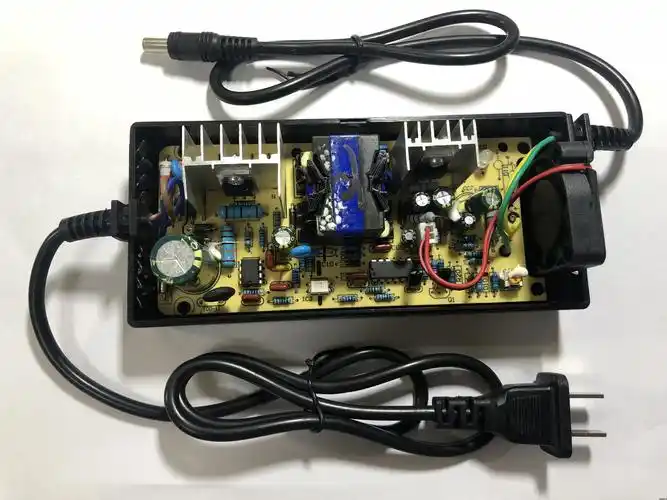
If you've ever searched for a LiFePO4 charger and compared it to standard lithium-ion battery chargers, you've probably experienced a bit of sticker shock. These chargers often come at a noticeably higher price point. But why?
The truth is, LiFePO4 (Lithium Iron Phosphate) batteries are not your average energy storage solution. Their unique chemical structure demands a more sophisticated charging system. In this article, we’ll explore the top reasons LiFePO4 battery chargers are more expensive and why the investment is absolutely worth it—especially if you care about battery life, safety, and system performance.
Before diving into the cost factors, let’s understand what makes LiFePO4 batteries different—and why they need specialized chargers in the first place.
Enhanced Safety: They are inherently stable and resistant to thermal runaway, reducing fire risk.
Extended Lifespan: LiFePO4 batteries can deliver 2,000 to 5,000+ charge cycles, far surpassing traditional lithium-ion options.
Stable Voltage Output: With a nominal voltage of 3.2V per cell, they maintain consistent power delivery, crucial for solar storage and electric vehicles.
Eco-Friendly Composition: Free of toxic metals like cobalt, making them safer for the environment and ethically superior.
These features make LiFePO4 batteries ideal for high-demand uses like solar energy systems, electric vehicles (EVs), RV power systems, and off-grid setups.
LiFePO4 batteries require a very specific charging protocol to perform optimally and safely:
Constant Current (CC): The charger must first deliver a steady current.
Constant Voltage (CV): Once the voltage hits 3.65V per cell, the charger must hold this voltage until the current drops.
Cut-Off & Monitoring: The charger needs to stop charging at the right time and monitor battery temperature.
These precise steps demand advanced control circuitry—adding complexity and cost to the charger design.
Unlike lithium-ion batteries that typically run at 3.6–3.7V per cell, LiFePO4 cells operate at 3.2V nominal voltage. Using a charger not tailored to this chemistry can lead to:
Overcharging or Undercharging
Premature battery degradation
Thermal damage
That’s why LiFePO4-specific chargers are engineered from the ground up to match the battery’s unique voltage and charging behavior.
Although LiFePO4 batteries are among the safest available, charging them incorrectly can still be dangerous. That’s why these chargers include enhanced safety measures:
Overvoltage Protection
Overcurrent Protection
Temperature Sensors
Short Circuit Prevention
State of Charge (SoC) Management
All these features not only increase the cost of materials but also require rigorous quality testing, contributing to the overall expense.
In critical applications like solar backup systems and EVs, reliability is non-negotiable. LiFePO4 chargers are often built with:
High-efficiency transformers
Superior heat dissipation mechanisms
Long-life capacitors
Robust metal housings
This commitment to quality ensures the charger delivers peak performance for years, even under continuous use—unlike cheap alternatives that degrade quickly.
Despite growing popularity, LiFePO4 technology is still niche compared to mainstream lithium-ion batteries. As a result:
Production volumes for chargers remain relatively low
Economies of scale haven’t kicked in
Component sourcing and manufacturing costs are higher per unit
As adoption increases, prices may come down—but for now, specialized production means higher costs.
Developing a LiFePO4 charger that meets modern safety certifications, efficiency standards, and international regulations involves significant research and development investment. Companies building quality chargers factor these development costs into the retail price.

Looking for a high-performance LiFePO4 battery to pair with a reliable charger? The EVE LF280K 280Ah 3.2V Grade A Rechargeable Prismatic Cell is a solid choice.
Massive 280Ah Capacity: Ideal for solar storage, EVs, and off-grid setups.
Ultra-Long Cycle Life: Up to 5,000 charge cycles with minimal degradation.
Thermal Stability: Maintains performance in high-temperature environments.
Prismatic Format: Easy to mount and scale in energy systems.
When paired with a compatible LiFePO4 charger, this battery offers incredible performance, safety, and longevity.
To ensure you’re getting quality components, we recommend purchasing from trusted suppliers like Evlithium. Evlithium offers:
Certified LiFePO4 batteries and chargers
Competitive pricing
Expert customer support
Fast shipping and warranty options
Whether you’re building a solar energy system, electric vehicle battery pack, or DIY off-grid setup, Evlithium provides the parts you need for safe and reliable power.
The higher cost of a LiFePO4 charger isn’t just a marketing tactic—it’s a reflection of the engineering, safety, and performance that these chargers must deliver. From chemistry-specific charging profiles to critical safety protections and long-term reliability, every element is designed to protect your battery and enhance your energy system.
If you're investing in a premium battery like the EVE LF280K 280Ah, cutting corners on the charger can compromise the entire setup. Choose a charger that’s built for LiFePO4 chemistry, and you’ll ensure optimal performance, safety, and lifespan.
Edit by paco
Last Update:2025-08-05 11:27:33
All Rights reserved © 2026 Evlithium Limited