 |
Welcome To Evlithium Best Store For Lithium Iron Phosphate (LiFePO4) Battery |
 |
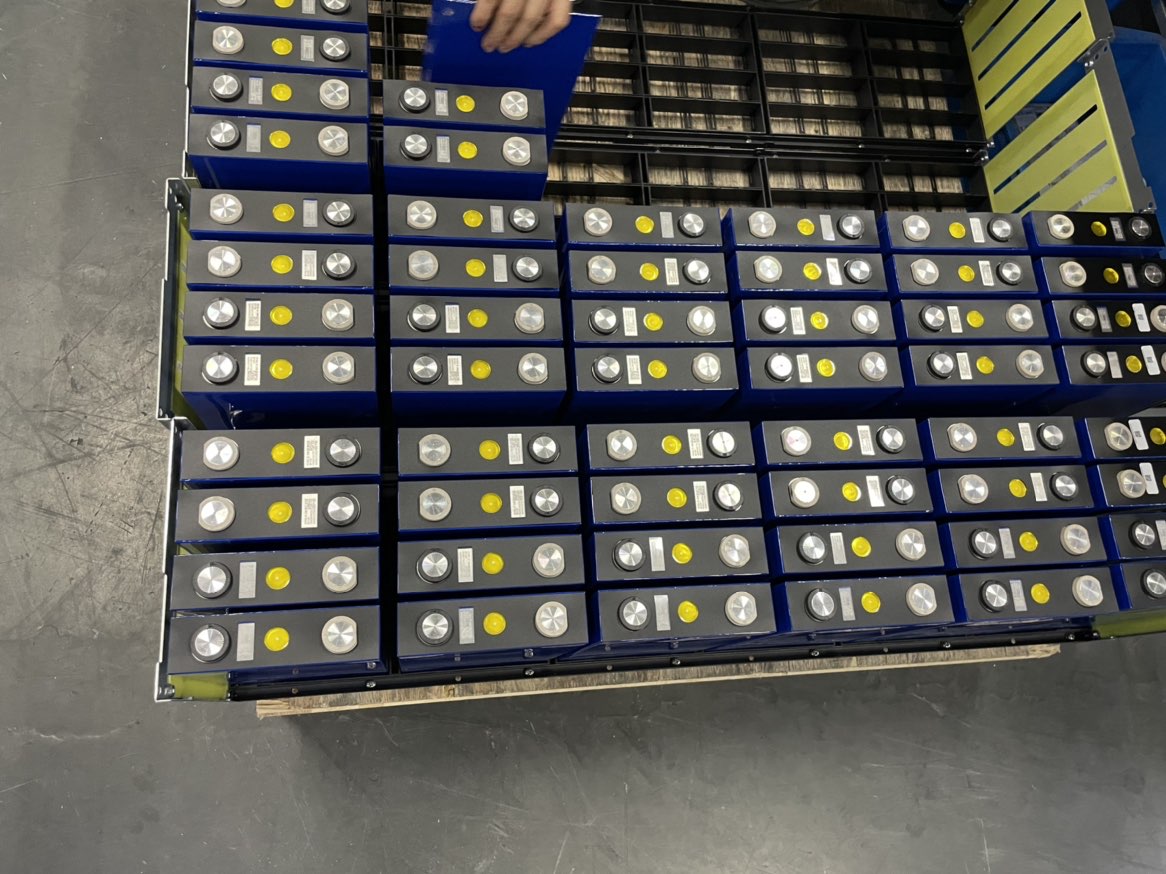
The outdoor energy storage market is projected to exceed USD 4 billion by 2026, growing at over 30% annually through 2035 — and standard battery packs simply weren’t built to keep up. Custom high-capacity battery packs give OEMs, engineers, and system integrators the performance headroom, form-factor precision, and safety compliance that off-the-shelf solutions can’t deliver. Whether you’re powering off-grid solar arrays, utility repair equipment, or remote environmental monitoring stations, the right custom pack makes the difference between a reliable deployment and a costly field failure.
This guide walks you through everything you need to design, specify, and integrate a high-capacity lithium battery pack for demanding outdoor environments — from chemistry selection to OEM collaboration and certification.
Off-the-shelf battery packs optimize for cost and general-purpose compatibility. Custom packs optimize for your application. That distinction matters enormously in outdoor deployments where temperature swings, moisture ingress, and continuous duty cycles push generic solutions to their limits.
Key customization levers include:
OEMs that deploy more than 10,000 units per year typically see a significantly lower total cost of ownership over five years compared to sourcing standard packs — due to reduced integration labor, fewer warranty returns, and tighter supply chain control.
Before selecting cells or a chemistry, define the load profile your pack must support. Answering these questions early prevents costly redesigns later:
Matching the pack’s output to the actual load profile — not a theoretical maximum — prevents overengineering and keeps costs controlled.
Lithium chemistry selection is one of the most consequential design decisions you’ll make. Each option balances energy density, safety, cycle life, and cost differently.
| Chemistry | Strengths | Best Outdoor Applications |
|---|---|---|
| LiFePO4 | Exceptional thermal stability, 2,000–5,000 cycles, safest lithium option | Infrastructure, off-grid solar, rugged industrial |
| NMC (NCM) | Balanced energy density and cycle life, good thermal management | Industrial robotics, security systems, construction |
| NCA | High energy density, long cycle life | EV-adjacent applications, high-demand portable power |
| LTO | Fastest charging, longest cycle life | High-power cycling applications, cold-climate deployments |
| LCO | Highest energy density by volume | Consumer electronics (less suited for harsh outdoor use) |
LiFePO4 is the most popular choice for outdoor energy storage because it resists thermal runaway even when physically damaged or exposed to elevated temperatures — a critical safety margin in remote deployments where rapid response is impossible. NMC offers a strong middle ground when energy density matters and thermal management is well-engineered.
Outdoor environments attack battery packs through three primary vectors: temperature extremes, humidity, and mechanical stress. Address all three at the design stage.
Lithium cells perform best between 15°C and 35°C. Outside that range, capacity drops and degradation accelerates. Design for a wide operating range of –20°C to +60°C by integrating:
Select an Ingress Protection (IP) rating matched to your deployment environment:
Inspect seals and connector gaskets regularly in the field — especially after seasonal temperature cycling, which degrades elastomeric seals over time.
| Material | Advantages | Considerations |
|---|---|---|
| Aluminum Alloy | Lightweight, excellent thermal dissipation, strong | Requires anodizing for corrosion resistance |
| Steel | High structural strength, cost-effective | Needs anti-corrosion coating in humid environments |
| PVC | Low cost, lightweight for portable applications | Limited heat resistance; can become brittle in cold |
Aluminum alloy enclosures dominate outdoor energy storage applications because they combine structural integrity with passive thermal management — the enclosure itself helps dissipate heat from high-rate discharge cycles.
A robust Battery Management System is non-negotiable for outdoor high-capacity packs. Your BMS should actively manage:
Supplement the BMS with thermal fuses, pressure relief valves, and redundant safety circuits for applications where failure consequences are severe — such as utility infrastructure or remote medical power systems.
| Standard | Scope | Why It Matters |
|---|---|---|
| UN38.3 | Transport compliance | Required to legally ship lithium batteries internationally |
| IEC 62619 | Industrial battery systems | Mandatory for large-format outdoor and industrial applications |
| IEC 62133-2 | Portable consumer devices | Applies when the pack integrates into a consumer-facing product |
| UL 2580 | EV and high-capacity packs | Validates thermal and mechanical stress resistance |
| EN 1175 | Industrial truck electrical safety | Required for powered industrial vehicle integration |
Budget 4 to 12 weeks per certification standard, plus potential costs for retesting if samples fail initial review. Build this timeline into your product development schedule — not as an afterthought.
The interface between your battery pack and host system affects real-time monitoring capability, diagnostic depth, and integration complexity.
Define your interface requirements before finalizing BMS firmware — retrofitting communication protocols adds cost and schedule risk.
Early collaboration with an experienced battery manufacturer compresses your development timeline and reduces field failure risk. The most successful OEM partnerships follow a consistent pattern:
One security system OEM partnered with their battery manufacturer from the design phase to co-develop an IP67-rated pack with a custom BMS tuned for extended standby modes. The result: a 40% reduction in field failures and a measurable drop in warranty claims within the first deployment year.
LiFePO4 is the best lithium chemistry for most outdoor energy storage applications. It offers superior thermal stability, a cycle life of 2,000–5,000 cycles, and the lowest risk of thermal runaway — making it the safest and most reliable option for remote or rugged deployments. NMC is a strong alternative when higher energy density is the priority and thermal management is carefully engineered.
The most effective approach combines a high IP-rated enclosure (IP67 or above), an advanced BMS with temperature-based cutoffs, and a scheduled maintenance plan that includes seal inspection and connector integrity checks. Selecting the right lithium chemistry — particularly LiFePO4 — also reduces inherent failure risk in high-temperature or high-humidity environments.
At minimum, outdoor lithium battery packs require UN38.3 for transport and IEC 62619 for industrial applications. UL 2580 is required in North American markets for high-capacity packs, and EN 1175 applies to industrial vehicle integrations. Consumer-facing products may also require IEC 62133-2. Plan for 4–12 weeks per standard during your validation phase.
High-quality custom packs using LiFePO4 or NMC chemistry typically deliver 2,000 to 5,000 charge cycles before capacity degrades below 80%. Actual lifespan depends on depth of discharge, ambient temperature, charge rate, and maintenance practices. A well-designed BMS that prevents overcharge and cell imbalance significantly extends real-world service life.
OEMs can specify voltage, capacity, form factor, cell chemistry, BMS firmware, communication interface, and enclosure IP rating. Manufacturers also offer application-specific options such as custom connectors, integrated displays for state-of-charge monitoring, and fast-charge capability. Early engagement — before mechanical design is finalized — gives manufacturers the flexibility to optimize for cost and performance simultaneously.
Designing custom high-capacity battery packs for outdoor energy storage requires deliberate choices across chemistry, thermal management, enclosure protection, BMS architecture, and certification strategy. LiFePO4 and NMC chemistries, paired with IP67+ enclosures and a well-specified BMS, form the foundation of reliable outdoor deployments. Engage experienced manufacturers early, validate thoroughly, and build certification timelines into your product roadmap — and your battery system will deliver consistent performance through years of demanding field operation.
Ready to spec your custom pack? Start by defining your load profile and contacting a qualified lithium battery manufacturer for a joint design review.
Edit by paco
Last Update:2026-05-13 15:58:56
All Rights reserved © 2026 Evlithium Limited