 |
Welcome To Evlithium Best Store For Lithium Iron Phosphate (LiFePO4) Battery |
 |
Battery posts and terminals might seem like small parts of a battery system, but they are critical for ensuring a strong, reliable connection between your battery and the electrical system in your vehicle, boat, RV, or other device. Without a secure connection, even the best battery can fail to deliver the performance you need.
This guide will cover everything from what battery posts and terminals are, their different types, how to maintain them, troubleshooting tips, and expert advice to keep your electrical system running at its best.
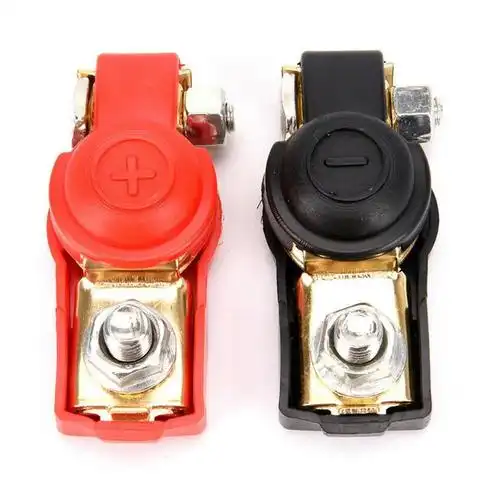
A battery terminal is the electrical contact point that connects a load or charger to a battery. Every battery has two primary terminals:
Positive terminal – Marked with a red color or a plus sign (+).
Negative terminal – Marked with a black color or a minus sign (–).
These terminals ensure the battery delivers power efficiently by maintaining a secure and stable connection.
Battery terminals come in various designs tailored for specific applications:
| Terminal Type | Best For | Pros | Cons |
|---|---|---|---|
| SAE Post | Cars, Trucks | Widely compatible | Prone to corrosion |
| Marine | Boats, RVs | Corrosion-resistant | Higher cost |
| L-Terminal | Motorcycles, Lawnmowers | Compact design | Limited current capacity |
Detailed Types:
Standard SAE Terminals – Common in automotive batteries. Positive post is slightly larger than the negative.
Marine Terminals – Designed for marine environments; corrosion-resistant with extra coating.
Hybrid Terminals – Combine SAE and threaded posts for versatility.
Side Terminals – Located on the battery side; less prone to corrosion.
L Terminals – L-shaped with a bolt hole; used in smaller engines.
Stud Terminals – Threaded posts for heavy-duty industrial applications.

A battery post is the metal protrusion on the battery where the terminal clamps attach. It’s the physical point of electrical contact between the battery and the terminal.
SAE Posts – Standard automotive type, fits SAE terminals.
JIS Posts – Smaller version found in older Japanese vehicles.
Threaded Posts – Common in heavy-duty and marine batteries, secured with nuts and bolts.
Tapered Posts – Conical in shape for clamp-on style terminals.
The post is the battery’s contact point, and the terminal is the connector. Together, they allow current to flow from the battery to the electrical system.
A clean, secure fit ensures:
Optimal battery performance
Reduced electrical resistance
Prevention of starting or charging issues
Material Comparison:
Lead Terminals – Affordable, but more prone to corrosion.
Copper Terminals – Best conductivity, corrosion-resistant, ideal for high-demand use.
Brass Terminals – Balanced durability and cost, common in aftermarket upgrades.
Positive – Red, marked with +
Negative – Black, marked with –
If markings are hidden by dirt or corrosion, clean the surface before connecting.
Tools: Baking soda, water, wire brush, wrench, gloves, goggles
Disconnect battery – Negative cable first, then positive.
Mix cleaning solution – 1 tbsp baking soda + 1 cup warm water.
Scrub terminals & posts – Use wire brush or terminal cleaner.
Rinse & dry – Wipe with a damp cloth, dry completely.
Reconnect battery – Positive first, then negative; apply anti-corrosion grease.
Pro Tip: Check terminals every 3 months.
Disconnect negative cable first, then positive.
Remove old terminals with a wrench.
Clean posts with a wire brush.
Install new terminals and tighten securely.
Reconnect positive cable first, then negative.
Corrosion – Causes poor electrical flow.
Loose connections – Leads to intermittent power loss.
Cracks or damage – Prevent secure contact.
Apply protective sprays or petroleum jelly.
Use anti-corrosion washers.
Maintain regular cleaning schedule.
Q: Can I mix SAE and JIS terminals?
No. They differ in size; mixing causes loose connections and fire risk.
Q: Why do terminals corrode faster in hot weather?
Heat speeds chemical reactions. Use AGM/gel batteries, protector spray, or heat shields.
Q: How tight should terminal clamps be?
Tight enough to prevent rotation, but not over-tightened. Torque: 5–7 Nm (cars), 8–10 Nm (trucks/RVs).
Q: Are copper terminals worth it?
Yes, for high-demand or marine use; they improve conductivity.
Q: Can corrosion drain my battery?
Yes. Resistance from corrosion can cause parasitic drain and charging issues.
Final Thoughts:
Battery posts and terminals might seem simple, but they are essential for the reliable performance of any battery-powered system. With regular inspection, cleaning, and correct installation, you can prevent most connection-related issues and extend the life of your battery
Edit by paco
Last Update:2025-08-09 10:29:50
All Rights reserved © 2026 Evlithium Limited