 |
Welcome To Evlithium Best Store For Lithium Iron Phosphate (LiFePO4) Battery |
 |
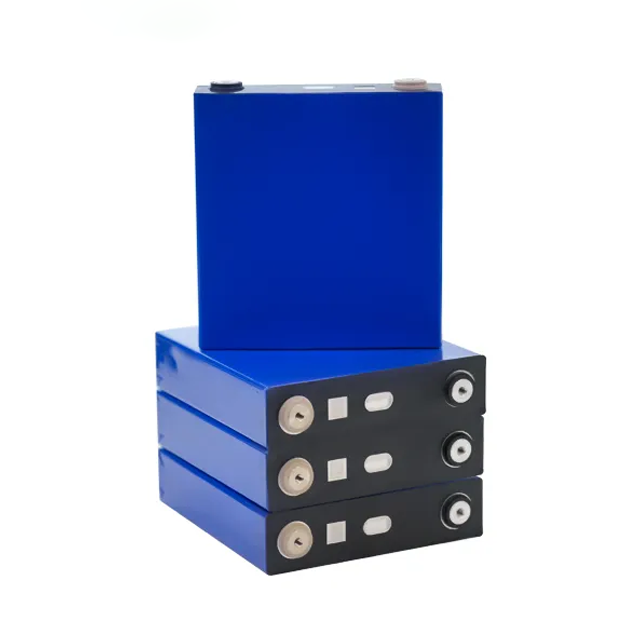
Batteries sit at the heart of modern energy systems, and the 3.2V battery has emerged as one of the most reliable and versatile power solutions available today. From solar energy storage and electric vehicles to off-grid homes and marine applications, this battery voltage plays a critical role in powering clean, efficient, and long-lasting systems.
If you are researching a 3.2V battery, chances are you want to understand how it works, why it is different from other battery voltages like 3.7V, and whether it is the right choice for your application. This in-depth guide delivers exactly that. Below, we break down the technology, chemistry, charging and discharging behavior, capacity, real-world applications, and key comparisons—all in clear, practical language.
A 3.2V battery refers to a battery cell with a nominal operating voltage of 3.2 volts. This voltage is most commonly associated with Lithium Iron Phosphate (LiFePO4) battery chemistry. While the nominal voltage remains 3.2V, the actual voltage fluctuates depending on the battery’s state of charge.
Nominal voltage: 3.2V
Fully charged voltage: 3.6V–3.65V
Charge cut-off voltage: 3.65V
Minimum discharge voltage: 2.0V
Recommended discharge cut-off: 2.5V
This voltage profile makes the 3.2V battery exceptionally stable compared to other lithium-based options. It balances energy efficiency, safety, and durability—qualities that are increasingly important in modern energy systems.
Compared to common battery voltages such as 1.5V alkaline cells or 3.7V lithium-ion batteries, the 3.2V battery occupies a unique sweet spot. While it operates at a slightly lower voltage than 3.7V lithium-ion cells, it offers superior safety, longer cycle life, and better thermal stability.
This makes 3.2V batteries especially well-suited for:
Long-term energy storage
Renewable energy systems
Applications requiring frequent charge and discharge cycles
The LiFePO4 battery is the most widely used and trusted 3.2V battery type. Its chemistry prioritizes safety and longevity over maximum energy density.
Key Characteristics:
Exceptional safety: Resistant to thermal runaway and overheating
Long cycle life: Typically 2,000–5,000 charge cycles
Stable voltage output: Ideal for sensitive electronics and power systems
Environmentally friendly: Non-toxic and cobalt-free
These advantages make LiFePO4 batteries the first choice for solar storage, electric vehicles, and industrial power systems.
Although less common, some lithium-ion chemistries may operate around the 3.2V range. These batteries often provide higher energy density but sacrifice safety and lifespan.
Trade-offs Include:
Higher risk of overheating
Shorter service life
Greater sensitivity to overcharging and deep discharging
For most applications, LiFePO4 remains the superior and safer option.
A 3.2V solar battery is typically a LiFePO4 cell designed specifically for solar energy storage systems. Solar installations demand batteries that can handle daily charge and discharge cycles without degradation—and this is where 3.2V batteries excel.
High cycle durability: Ideal for daily solar charging
Consistent power delivery: Stable voltage supports inverters and controllers
Long service life: Reduces replacement and maintenance costs
These batteries are widely used in both off-grid solar systems and hybrid grid-tied solutions.
The 3.2V LiFePO4 battery is a building block for larger battery banks, such as 12V, 24V, and 48V systems. By connecting cells in series and parallel, users can scale voltage and capacity to match their energy needs.
Lightweight design: Much lighter than lead-acid alternatives
High efficiency: Minimal energy loss during charging and discharging
Long lifespan: Up to 10 times longer than traditional lead-acid batteries
These features make LiFePO4 batteries ideal for RVs, marine systems, backup power, and off-grid homes.
Charging a 3.2V battery correctly is essential for performance and longevity. LiFePO4 batteries require a constant current–constant voltage (CC-CV) charging method.
Constant Current Phase: Voltage rises steadily as current flows into the battery
Constant Voltage Phase: Voltage stabilizes at 3.6V–3.65V while current gradually decreases
Use a charger designed specifically for LiFePO4 batteries
Never exceed 3.65V per cell
Avoid ultra-fast charging unless approved by the manufacturer
Following these steps prevents overheating and extends battery life.
Discharging refers to drawing power from the battery to run devices or systems. While LiFePO4 batteries tolerate deep cycles better than many alternatives, proper discharge management still matters.
Avoid dropping below 2.5V per cell
Maintain a remaining charge of 20–30% whenever possible
Use a Battery Management System (BMS) to protect against over-discharge
A controlled discharge ensures consistent performance and prevents permanent damage.
Battery capacity measures how much energy a battery can store and is expressed in ampere-hours (Ah).
Small systems: 10Ah–30Ah
Medium systems: 50Ah–100Ah
Large-scale or industrial systems: Custom-designed capacities
Higher capacity means longer runtimes, making large-capacity 3.2V batteries ideal for solar storage and electric mobility.
The versatility of the 3.2V battery allows it to serve a wide range of industries:
Solar energy storage systems
Electric vehicles and e-bikes
Backup power solutions
Marine and RV power systems
Off-grid homes and cabins
Portable and industrial equipment
Its reliability and safety profile make it one of the most trusted battery solutions on the market.
Although 3.7V and 3.2V batteries may appear similar, they are not interchangeable in most cases.
Voltage: 3.7V delivers higher voltage, risking damage to 3.2V systems
Chemistry: 3.7V batteries often use LiCoO₂ or NMC, which are less stable
Cycle life: 3.2V LiFePO4 batteries last significantly longer
Using a 3.7V battery in place of a 3.2V battery can cause overvoltage, overheating, or system failure.
The 3.2V battery, especially in LiFePO4 form, has become a cornerstone of modern energy storage. Its unmatched safety, long cycle life, stable voltage, and adaptability make it ideal for solar power, electric vehicles, and off-grid applications.
If you are seeking a dependable, efficient, and future-proof energy solution, the 3.2V LiFePO4 battery stands out as one of the best options available today.
Edit by paco
Last Update:2026-01-12 11:15:27
All Rights reserved © 2026 Evlithium Limited