 |
Welcome To Evlithium Best Store For Lithium Iron Phosphate (LiFePO4) Battery |
 |
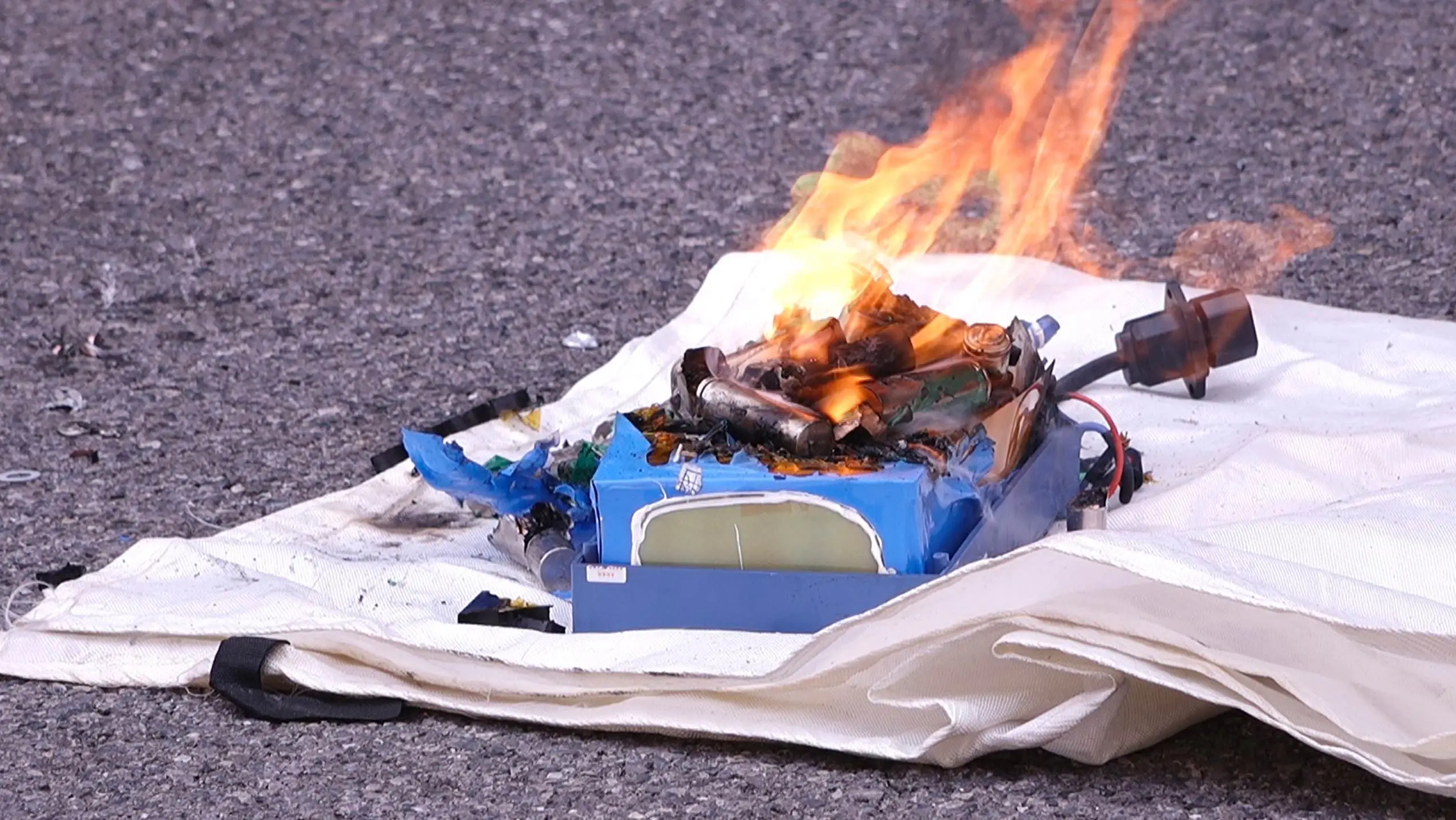
Lithium batteries have become an essential part of modern life. From smartphones and laptops to electric vehicles, drones, power tools, marine equipment, and large-scale energy storage systems, these rechargeable batteries provide high energy density, lightweight construction, and reliable power. However, despite their advantages, lithium-ion batteries can catch fire under certain conditions, sometimes resulting in intense fires, explosions, and the release of hazardous gases.
Why does this happen? Is it caused by overcharging, poor-quality battery cells, manufacturing defects, or improper use? The answer is not as simple as one might think. Lithium battery fires usually involve a combination of electrochemical reactions, electrical faults, mechanical damage, and thermal conditions that eventually cause the battery to lose its ability to operate safely.
According to the National Fire Protection Association (NFPA), battery damage, improper charging, extreme temperatures, and product defects are among the major factors that can lead to lithium-ion battery fires. The U.S. Occupational Safety and Health Administration (OSHA) also identifies internal short circuits, mechanical damage, improper charging, and excessive temperatures as potential triggers of thermal runaway.
For battery manufacturers, engineers, distributors, and end users, understanding these risks is essential. Preventing a battery fire requires more than simply choosing a reliable battery brand. It involves proper cell selection, battery management systems (BMS), electrical protection, thermal management, manufacturing quality control, and correct operating procedures.
In this guide, we will examine the main causes of lithium battery fires, explain the science behind thermal runaway, compare the fire safety characteristics of different battery chemistries, and explore practical ways to reduce fire risks in battery-powered applications.
Lithium-ion batteries work by moving lithium ions between the positive electrode (cathode) and negative electrode (anode) during charging and discharging. These electrodes are separated by a thin porous separator that allows lithium ions to pass through while preventing direct electrical contact between the two electrodes. The electrolyte provides the medium through which lithium ions travel, while the external circuit carries electrons to power connected equipment.
This electrochemical structure allows lithium-ion batteries to store considerable energy in a relatively compact space. However, it also creates potential safety risks. The electrolyte used in many conventional lithium-ion batteries contains flammable organic solvents, and the battery can release substantial heat if an internal fault causes an uncontrolled reaction. Under normal operating conditions, the battery's protective systems and thermal design keep these reactions within acceptable limits. When those protections fail or the cell suffers physical or electrical damage, the situation can change rapidly.
A lithium-ion battery generally consists of five major components: the cathode, anode, separator, electrolyte, and current collectors. Each component performs a specific function, and the reliability of the complete cell depends on how well these components work together.
During charging, lithium ions move from the cathode through the electrolyte and separator toward the anode, where they are stored within the anode material. During discharge, the ions move back toward the cathode, while electrons travel through the external circuit and provide electrical energy to the connected device.
The separator plays a particularly important role in battery safety. It is usually made from a thin microporous polymer material that prevents direct contact between the positive and negative electrodes. If this separator becomes damaged, melts, or loses its insulating properties, an internal short circuit may develop. The resulting current and heat can damage additional internal components, potentially initiating thermal runaway.
Thermal runaway is one of the most important mechanisms behind lithium-ion battery fires. It describes an uncontrollable self-heating process in which the heat generated inside a battery exceeds its ability to dissipate that heat. As the temperature increases, additional chemical reactions begin to occur, releasing even more heat and accelerating the failure process.
Think of it as a chain reaction. A small internal short circuit may initially produce localized heating. As the temperature rises, the solid electrolyte interphase (SEI) layer can begin to decompose, and other internal reactions may follow. At higher temperatures, the separator can shrink or melt, potentially allowing the electrodes to make direct contact. Electrolyte decomposition and other exothermic reactions can then generate additional heat and flammable gases.
In severe cases, the cell's internal pressure increases until its safety vent opens or the cell ruptures. Flammable gases may escape and ignite if suitable ignition conditions exist. In a battery pack containing multiple interconnected cells, heat transfer from one failing cell can trigger neighboring cells, creating a cascading thermal runaway event.
Thermal runaway is not necessarily an instantaneous process. Depending on the cell design, chemistry, state of charge, damage mechanism, and surrounding conditions, it may develop over a period of time or escalate very quickly. OSHA identifies thermal runaway as a chain reaction capable of producing fire, explosions, and hazardous chemical byproducts.
There is rarely just one universal explanation for lithium battery fires. Different incidents can begin with different initiating events, but many eventually lead to internal short circuits, excessive heat generation, or uncontrolled electrochemical reactions.
Understanding the following eight causes can help manufacturers improve battery safety and help users avoid preventable failures.
An internal short circuit is one of the most serious failure mechanisms in lithium-ion batteries. It occurs when the positive and negative electrodes become electrically connected inside the cell through an unintended conductive pathway. Because the electrodes normally remain separated by an insulating membrane, even a small defect in this barrier can create a dangerous condition.
Several factors can contribute to internal short circuits. Manufacturing contamination, metallic particles, electrode misalignment, separator damage, and the formation of lithium dendrites can all create pathways for unintended electrical contact. Lithium dendrites are needle-like metallic lithium structures that may develop under certain unfavorable charging conditions, particularly when lithium plating occurs on the anode.
When an internal short circuit develops, electrical energy can be released locally as heat. Unlike an external short circuit, this fault may be extremely difficult to detect or interrupt because the current flows inside the sealed battery cell. A battery management system can monitor voltage, temperature, and current, but it cannot directly eliminate every microscopic internal defect.
If the localized heat becomes sufficiently intense, the separator may suffer additional damage, and thermal runaway can begin. This is why cell manufacturing quality, material purity, separator integrity, and process control are fundamental to lithium battery safety.
Overcharging is another major cause of lithium-ion battery failure. Every lithium-ion cell has a specified maximum charging voltage. When charging continues beyond this limit, the internal electrochemical system may become unstable, increasing the possibility of lithium plating, electrolyte oxidation, gas generation, and internal heating.
For example, many conventional LiFePO4 cells have a typical recommended upper charging voltage of approximately 3.65V per cell, while many conventional NMC lithium-ion cells use a typical upper limit around 4.2V per cell. These are common reference values rather than universal specifications; the actual limits must always follow the individual cell manufacturer's datasheet.
If a charger supplies excessive voltage, the battery may experience abnormal electrochemical reactions. In some chemistries, overcharging can destabilize the cathode structure and release additional heat and gas. It may also cause the battery to swell as internal pressure increases.
This is where the Battery Management System (BMS) becomes particularly important. A properly designed BMS monitors cell voltages and can disconnect the charging circuit when a cell exceeds its specified voltage limit. However, the BMS is not an absolute guarantee against fire. Incorrect wiring, defective voltage sensors, failed MOSFETs, poor protection settings, and charger compatibility problems can compromise its effectiveness.
Overcharging can be especially dangerous in large battery packs because a fault affecting one cell may influence the electrical and thermal conditions of neighboring cells.
Lithium-ion batteries are designed to withstand normal operating conditions, but they are not indestructible. Dropping, crushing, puncturing, bending, or exposing a battery to strong mechanical impacts can damage its internal structure and create conditions that lead to an internal short circuit.
Consider an electric vehicle battery pack involved in a collision. Even if the outer enclosure appears relatively intact, the internal battery modules may have experienced deformation, compression, or localized damage. Such damage can compromise cell separators, electrode alignment, insulation materials, or electrical connections.
The same risk applies to smaller applications. A drone battery that crashes during flight, a power tool battery dropped onto a hard surface, or a marine battery exposed to repeated impacts may develop internal damage that is not immediately visible.
Mechanical damage does not always cause an immediate fire. A damaged battery may continue operating for some time before an internal short circuit develops. This delayed failure makes post-impact inspection particularly important.
For battery manufacturers, mechanical protection should be considered during pack design. Protective enclosures, shock-absorbing materials, structural supports, secure cell mounting, and appropriate vibration resistance can help reduce the likelihood of damage during transportation and operation.
Temperature has a direct influence on lithium-ion battery performance, lifespan, and safety. Batteries generate heat naturally during charging and discharging because of internal resistance and electrochemical processes. Under normal conditions, this heat can be dissipated through the battery's thermal management system or surrounding environment.
Problems arise when heat generation exceeds the battery's cooling capacity. High ambient temperatures, direct sunlight, inadequate ventilation, excessive discharge current, and poorly designed thermal management systems can all contribute to overheating.
For example, an energy storage battery installed in a poorly ventilated container may experience elevated temperatures during continuous high-power operation. If the cooling system fails or airflow becomes restricted, the temperature of individual cells may rise beyond their permitted operating range.
High temperatures also accelerate battery degradation. They can promote electrolyte decomposition, SEI growth, and other unwanted chemical reactions. Over time, these processes can increase internal resistance and create additional heat during operation.
It is important to distinguish between normal operating temperatures and temperatures that can trigger thermal runaway. The exact thresholds depend on cell chemistry, construction, state of charge, and the nature of the fault. There is no single temperature that applies to every lithium-ion battery.
A lithium battery can be dangerous even before it reaches the customer if manufacturing processes do not meet appropriate quality standards. Battery cells contain extremely thin internal layers, and small production defects can create significant safety risks.
Potential manufacturing problems include metallic contamination, electrode coating inconsistencies, separator defects, poor welding, improper electrolyte filling, and incorrect cell assembly. For example, a tiny metallic particle trapped between the electrodes may eventually damage the separator and create an internal short circuit.
Poor-quality materials can introduce additional risks. A separator with insufficient thermal stability, an electrolyte with unsuitable characteristics, or an electrode material with inconsistent properties may reduce the cell's ability to withstand abnormal conditions.
Manufacturing quality control should therefore cover the entire production process, including raw material inspection, electrode preparation, coating, drying, calendaring, cell assembly, electrolyte filling, formation, aging, and final testing.
For battery pack manufacturers, selecting reliable cell suppliers is equally important. A low purchase price does not necessarily represent good long-term value if the cells have inconsistent capacity, excessive internal resistance variation, poor traceability, or inadequate safety performance.
A professional manufacturer should establish incoming inspection procedures, cell grading standards, traceability systems, and appropriate electrical and environmental testing before assembling battery packs.
An external short circuit occurs when the positive and negative terminals of a battery become connected through an unintended low-resistance pathway outside the cell. This can happen because of damaged cables, incorrect wiring, exposed terminals, loose conductive objects, or insulation failure.
When a short circuit occurs, a large current may flow through the affected circuit. The resulting heat can damage cables, connectors, terminals, and nearby materials. In severe cases, the heat may spread into the battery itself and contribute to cell failure.
Imagine a lithium battery stored without terminal protection alongside metal tools. If a conductive object bridges the positive and negative terminals, the battery may discharge at an extremely high current. This is particularly dangerous for high-capacity batteries capable of delivering substantial electrical power.
External short-circuit protection is therefore a critical element of battery system design. Appropriate fuses, circuit breakers, contactors, insulation, terminal covers, and cable sizing help reduce the risks associated with electrical faults.
It is also important to remember that a fuse must be selected according to the battery's electrical characteristics and application requirements. An incorrectly rated fuse may fail to interrupt a dangerous current or may interrupt normal operation unnecessarily.
Using an unsuitable charger can increase the risk of lithium battery failure. Different lithium battery chemistries and cell configurations require specific charging voltage limits, current limits, and charging profiles. A charger designed for one battery type should not automatically be assumed to be suitable for another.
For instance, a charger intended for a conventional NMC battery may use a different voltage profile from one designed for a LiFePO4 battery. Connecting the wrong charger may expose the battery to excessive voltage or an unsuitable charging process.
Charging current is another important consideration. Charging a battery beyond its specified maximum current can increase heat generation and may cause lithium plating under unfavorable conditions, especially at low temperatures.
The charging environment also matters. Charging batteries under pillows, inside enclosed spaces without ventilation, near combustible materials, or in direct sunlight can increase the consequences of overheating.
A reliable charging system should be matched to the battery chemistry, series configuration, capacity, and manufacturer's charging specifications. Communication between the charger and BMS can provide additional control in applications where programmable charging parameters are required.
Lithium-ion batteries gradually degrade as they undergo repeated charging and discharging. Over time, internal chemical changes can reduce usable capacity, increase internal resistance, and affect the battery's ability to operate safely.
Several mechanisms contribute to aging, including SEI layer growth, electrolyte consumption, lithium inventory loss, electrode structural changes, and particle cracking. These processes vary according to battery chemistry, temperature, depth of discharge, charging rate, and operating conditions.
As internal resistance increases, more heat may be generated during charging and discharging at the same current. If a degraded battery is repeatedly exposed to high loads or elevated temperatures, the additional stress can accelerate further deterioration.
Improper storage can also create problems. Leaving batteries in extremely hot environments, storing damaged cells, exposing terminals to moisture, or keeping batteries outside their specified voltage range may increase degradation and safety risks.
Long-term storage should follow the battery manufacturer's instructions. Depending on the chemistry and application, this generally involves maintaining an appropriate state of charge, controlling temperature, protecting terminals, and periodically inspecting the battery condition.
An old battery does not automatically become dangerous simply because it has reached a certain age. However, abnormal heating, swelling, leakage, corrosion, physical deformation, or unexpected performance changes should never be ignored.
Lithium-ion battery fires present several challenges that distinguish them from many conventional electrical fires. One of the biggest concerns is the possibility of thermal runaway spreading from one cell to neighboring cells.
When a cell enters thermal runaway, it can release heat, flammable gases, and potentially hazardous chemical substances. These gases may include hydrogen, carbon monoxide, and other decomposition products, depending on the battery chemistry and failure conditions. Some battery fires may also release hydrogen fluoride and other toxic substances.
Another concern is the possibility of delayed ignition or reignition. Even after visible flames have disappeared, damaged cells may retain electrical energy and continue experiencing internal chemical reactions. A battery pack that appears stable can therefore present additional hazards later.
Battery packs containing hundreds or thousands of cells create another challenge. If thermal barriers and cooling systems are insufficient, heat from a failing cell can spread to adjacent cells, potentially producing a larger incident.
The U.S. Fire Administration identifies thermal runaway, hazardous gases, fire propagation, and reignition as important challenges associated with lithium-ion battery incidents.
For these reasons, lithium battery fires require appropriate emergency response procedures rather than ordinary household fire-handling assumptions.
Not all lithium batteries have the same thermal stability or fire characteristics. Different cathode materials exhibit different behaviors under overheating, overcharging, mechanical damage, and other abuse conditions.
Three commonly discussed chemistries are lithium iron phosphate (LiFePO4), nickel manganese cobalt oxide (NMC), and lithium titanate (LTO). Each has its own advantages and limitations.
|
Battery Chemistry |
Thermal Stability |
Main Advantages |
Safety Considerations |
|---|---|---|---|
|
LiFePO4 (LFP) |
Generally high |
Good cycle life, strong thermal stability, lower tendency toward oxygen release from the cathode under abuse |
Can still experience thermal runaway and electrolyte-related fires |
|
NMC |
Generally lower than LFP under comparable abuse conditions |
High energy density, good power performance |
Greater sensitivity to certain thermal abuse conditions |
|
LTO |
Generally very high |
Excellent cycle life, high power capability, good low-temperature performance |
Not immune to electrical faults, overheating, or external fire |
|
Lithium polymer |
Depends on underlying chemistry |
Flexible packaging and high energy density |
Pouch deformation and damage can create safety risks |
LiFePO4 batteries are generally considered a safer option for many energy storage and industrial applications because their cathode material has better thermal stability than conventional nickel-rich layered oxide cathodes.
Unlike some other lithium-ion cathode materials, LiFePO4 has a strong phosphate-based crystal structure that is less prone to releasing oxygen during thermal decomposition. This can reduce certain risks associated with severe thermal abuse.
However, it would be incorrect to describe LiFePO4 batteries as completely fireproof. They still contain combustible electrolyte, and internal short circuits, external heating, overcharging, or mechanical damage can cause serious failures.
NMC batteries offer higher energy density in many configurations, making them attractive for electric vehicles and applications where weight and space are important. Their safety performance depends heavily on nickel content, cell design, manufacturing quality, BMS protection, and thermal management.
LTO batteries use lithium titanate as the anode material. They offer excellent cycle life and high-rate charging capabilities, along with favorable thermal stability characteristics. Their relatively low energy density and higher material costs can limit their use in some applications.
The best battery chemistry should therefore be selected according to the application's energy density, power requirements, cycle life, temperature range, safety requirements, and total cost of ownership.
Lithium batteries do not always fail without warning. In many cases, physical changes, abnormal temperatures, unusual sounds, or unexpected performance behavior can indicate that something is wrong.
Recognizing these signs early can help prevent a minor battery fault from becoming a serious safety incident.
Common warning signs include:
Battery swelling: A visibly swollen battery may indicate internal gas generation and should not continue to be used.
Abnormal temperature: A battery that becomes unusually hot during normal operation or charging may have an internal or external fault.
Unusual odors: A chemical or solvent-like smell may indicate electrolyte leakage or internal damage.
Hissing or popping sounds: These sounds may indicate internal pressure buildup or gas venting.
Smoke or vapor: Smoke coming from a battery should be treated as an emergency warning.
Unexpected voltage changes: Unstable voltage, abnormal cell imbalance, or sudden performance deterioration may indicate a developing problem.
Physical damage: Cracks, dents, leakage, melted insulation, and damaged terminals require immediate attention.
A particularly important point is that a battery can be dangerous even when its outer casing looks normal. Internal damage may not be visible without specialized inspection equipment.
If you observe swelling, smoke, unusual heating, or signs of venting, stop using the battery. Do not attempt to charge, open, puncture, or repair it. If smoke or fire is present, evacuate the area and contact emergency services.
Preventing lithium battery fires requires a comprehensive approach that covers battery design, cell manufacturing, electrical protection, charging management, thermal control, and everyday use. No single protection measure can eliminate every possible failure mechanism. Instead, multiple independent safety measures should work together to reduce the probability of an incident and limit its consequences if a fault occurs.
For battery manufacturers, safety begins long before the battery pack reaches the customer. Selecting reliable cells, designing appropriate electrical protection, and validating the complete battery system are all essential steps.
The quality of individual battery cells directly influences the safety and reliability of the finished battery pack. Manufacturers should select cells from qualified suppliers with consistent production processes, traceable manufacturing batches, and documented technical specifications.
Important cell characteristics include capacity consistency, internal resistance, voltage consistency, thermal performance, and cycle life. Incoming inspection and batch testing can help identify abnormal cells before they are assembled into a battery pack.
Cell selection should also consider the application. A battery intended for an electric vehicle, drone, marine system, or industrial energy storage installation may require different combinations of energy density, discharge rate, temperature tolerance, and mechanical durability.
Choosing a cell simply because it offers a lower purchase price can create long-term risks. A small reduction in initial material costs may result in greater failure rates, warranty expenses, and safety concerns.
A Battery Management System (BMS) is one of the most important protection components in a rechargeable lithium battery pack.
Its primary function is to monitor battery operating conditions and prevent cells from exceeding specified electrical and thermal limits.
A properly designed BMS typically provides:
Overcharge protection.
Over-discharge protection.
Overcurrent protection.
Short-circuit protection.
Temperature monitoring.
Cell voltage monitoring.
Cell balancing.
Communication and fault reporting.
For example, if one cell reaches its maximum permitted charging voltage, the BMS can interrupt charging to prevent further voltage increases. Similarly, if the battery temperature exceeds a configured protection threshold, the BMS may reduce current or disconnect the battery.
Advanced BMS solutions can also record operating data, identify abnormal voltage differences between cells, estimate state of charge (SOC), and communicate with chargers, inverters, or vehicle controllers.
However, a BMS should never be treated as a substitute for good cell quality or proper thermal design. It cannot necessarily detect every internal short circuit, manufacturing defect, or rapidly developing thermal runaway event.
A charger must match the battery's chemistry, series cell count, charging voltage, and permitted charging current.
For example, a 48V-class LiFePO4 battery and a 48V-class NMC battery may have different charging voltage requirements even though their nominal voltage classifications appear similar.
Manufacturers should provide clear charging specifications and ensure that chargers operate within the battery's approved limits. For applications requiring advanced charging control, communication between the BMS and charger can help improve charging accuracy and safety.
Users should avoid improvised charging arrangements, damaged charging cables, and low-quality chargers without appropriate protection.
Thermal management is especially important for high-capacity batteries used in electric vehicles, industrial equipment, and battery energy storage systems.
A well-designed thermal management system helps maintain a suitable operating temperature and reduces temperature differences between individual cells.
Depending on the application, thermal management may involve natural convection, forced-air cooling, liquid cooling, thermal interface materials, or integrated heating systems.
For large battery packs, engineers should also consider thermal propagation. This means evaluating how heat from a failing cell might affect neighboring cells and whether the pack design can delay or prevent the spread of thermal runaway.
Useful design measures include thermal barriers, adequate spacing, controlled venting pathways, temperature sensors, and suitable enclosure materials.
Battery safety does not end when the battery is manufactured. Correct charging, handling, and storage procedures are equally important.
Users should follow the manufacturer's recommended operating temperature and charging conditions. Batteries should be stored in suitable environments away from direct sunlight, excessive heat, moisture, and combustible materials.
Avoid leaving batteries in vehicles exposed to extreme summer temperatures or charging them in confined spaces where heat cannot dissipate.
For long-term storage, follow the manufacturer's recommended state-of-charge range rather than assuming that a completely full or completely empty battery is always appropriate.
Battery inspection can identify warning signs before they develop into more serious problems.
For industrial and commercial battery systems, maintenance procedures should include checking electrical connections, insulation, enclosure integrity, temperature records, BMS alarms, and signs of corrosion or moisture intrusion.
Battery packs should also be inspected following significant impacts, abnormal vibration, water exposure, or unusual operating events.
Damaged batteries should be isolated from normal operations and evaluated by qualified personnel. Batteries showing swelling, smoke, leakage, or abnormal heating should not be returned to service simply because they appear to recover after cooling.
Knowing how to respond to a lithium battery emergency can reduce the risk of serious injuries. However, battery fires can escalate rapidly, and the correct response depends on the battery size, location, and severity of the incident.
If a lithium battery becomes unusually hot, starts swelling, releases smoke, or produces unusual sounds, treat the situation as a potential battery failure.
The following precautions are important:
1. Stop using the battery. Do not continue charging or discharging a battery showing signs of failure. If it can be done without approaching a hazardous battery, stop the connected equipment or isolate the power supply.
2. Move away from the battery. If there is smoke, venting, or fire, evacuate the immediate area. Do not attempt to carry a smoking or burning battery outside.
3. Avoid inhaling battery smoke. Lithium battery fires can release toxic and irritating gases. Move to fresh air and avoid entering smoke-filled areas.
4. Contact emergency services. Report that a lithium-ion battery is involved so responders can prepare for the specific hazards associated with battery fires.
5. Do not handle a damaged battery. Never puncture, open, crush, or attempt to repair a battery that has experienced thermal runaway or serious physical damage.
6. Be aware of reignition. A battery that appears extinguished may still contain damaged cells capable of reigniting. Leave monitoring and post-fire handling to appropriately trained emergency personnel.
For large battery systems and electric vehicles, emergency response should follow the manufacturer's emergency response guide and applicable fire safety procedures.
The U.S. Fire Administration emphasizes that lithium-ion battery incidents can involve toxic gases, difficult cooling requirements, and reignition risks.
So, what causes lithium batteries to catch fire?
The main causes include internal short circuits, overcharging, mechanical damage, excessive temperatures, manufacturing defects, external short circuits, incorrect charging equipment, and battery degradation. Although these problems may begin differently, many can eventually lead to excessive internal heat and thermal runaway.
Thermal runaway is the central mechanism behind many severe lithium-ion battery fires. Once an uncontrolled self-heating reaction begins, the battery may release substantial heat, flammable gases, and hazardous chemical substances. In multi-cell battery packs, the failure can potentially spread from one cell to neighboring cells.
The good news is that many battery fire risks can be reduced through proper engineering and responsible operation. Selecting high-quality cells, implementing reliable BMS protection, using compatible chargers, improving thermal management, and maintaining strict manufacturing quality standards are all essential.
For battery manufacturers and OEM/ODM suppliers, fire safety should be considered from the earliest stages of product development rather than treated as a final inspection requirement. A reliable lithium battery is not simply a collection of high-capacity cells. It is a carefully engineered system in which cell chemistry, electrical protection, thermal design, mechanical structure, and manufacturing quality work together.
At Evlithium, understanding these safety principles is essential when developing customized lithium battery solutions for industrial equipment, electric vehicles, marine applications, drones, and energy storage systems. Choosing the right battery chemistry and protection architecture helps build battery packs that deliver dependable performance while addressing the safety requirements of their intended applications.
Ultimately, lithium battery safety depends on the entire battery system, not just the battery cells themselves.
Yes. A lithium-ion battery can catch fire even when it is not connected to a charger. Internal short circuits, manufacturing defects, physical damage, and exposure to external heat can initiate thermal runaway. A battery that is not actively charging still contains stored electrical energy and remains capable of experiencing an internal failure.
No. Overcharging increases the risk of battery damage and thermal runaway, but it does not automatically result in a fire. Modern lithium battery packs typically use a BMS to prevent excessive charging voltage. However, protection failures, unsuitable chargers, and defective cells can still create dangerous conditions.
Generally, yes. LiFePO4 batteries have better cathode thermal stability than conventional NMC batteries under many abuse conditions. Their phosphate-based cathode structure is less prone to oxygen release during thermal decomposition. However, LiFePO4 batteries are not completely fireproof and can still experience thermal runaway under severe electrical, mechanical, or thermal abuse.
Warning signs may include unusual heating, swelling, chemical odors, hissing sounds, popping noises, electrolyte leakage, or smoke. Unexpected voltage changes and abnormal battery performance can also indicate developing problems. If these signs appear, stop using the battery, keep away from it, and seek professional assistance. If smoke or fire occurs, evacuate and contact emergency services.
Yes. Physical damage can compromise the internal separator, electrodes, insulation, or electrical connections. An internal short circuit may develop immediately or after a delay, meaning a damaged battery can remain hazardous even if it initially appears to function normally. Batteries involved in significant impacts, punctures, crushing, or deformation should be removed from service and assessed by qualified professionals.
Edit by paco
Last Update:2026-11-07 11:02:04
All Rights reserved © 2026 Evlithium Limited