 |
Welcome To Evlithium Best Store For Lithium Iron Phosphate (LiFePO4) Battery |
 |
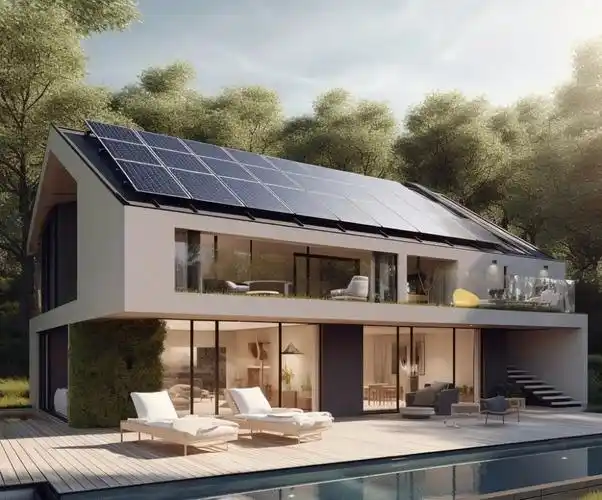
This year marks a major generational shift in residential energy storage cells. The 100Ah cell — long the dominant workhorse of the residential storage market — is steadily losing its pole position, while larger-format 280Ah and 314Ah cells are rapidly penetrating the sector and becoming the go-to choice in mature markets such as Europe and Australia. Meanwhile, 122Ah, 392Ah, and even 500Ah+ cells are also being introduced into residential applications. From small-format to large-format, from standardized to differentiated, the residential storage cell market is undergoing a technological migration similar to what the utility-scale segment experienced several years ago. So, among 100Ah, 314Ah, 122Ah, and the future 500Ah+ cells, which one truly deserves the "center stage" of the residential market?
We observe that starting from Q2 2026, the penetration rate of 314Ah lifepo4 cells in the residential storage market has accelerated notably, currently surpassing 50%. The application of 314Ah cells in balcony storage has also begun to emerge.
Before 2026, cells in the 100Ah class had long dominated the residential energy storage market. Since residential storage systems typically adopt a 48V/51.2V low-voltage architecture, conventional solutions generally use 15 or 16 battery packs in series. This allows 100Ah cells to form a battery system of approximately 5kWh capacity, which fits the needs of overseas households. At the same time, smaller-capacity cells such as 50Ah and 72Ah were also widely used, mainly in smaller balcony storage units and portable power stations.
Starting in 2025, the residential storage market experienced a resurgence, with demand for 100Ah cells surging. However, because many cell manufacturers had primarily focused on power batteries and utility-scale storage, production capacity for 100Ah cells did not expand at the same pace. This led to a situation where 100Ah cells became "hard to find" in 2025. By the second half of 2025, the price of 100Ah cells had climbed to nearly RMB 0.5/Wh — even higher than the price of larger 314Ah cells.
Faced with insufficient supply and soaring prices for 100Ah and smaller cells, residential storage system makers accelerated their transition toward 280Ah and 314Ah large-format cells. According to industry data, in the first quarter of 2026, the penetration rate of 280Ah/314Ah cells in the residential storage market had already exceeded 20%.
Entering the second quarter, the adoption of 280Ah/314Ah cells in residential storage picked up significant speed. Leading residential storage manufacturers report that after Q2, 314Ah cells already accounted for more than 50% of their product shipments. Overall, the penetration rate of 314Ah cells in the residential storage market has now surpassed 50%, officially replacing 100Ah as the new mainstream.
Why has 314Ah been able to displace 100Ah so quickly? The core reason is that the residential storage sector is now pursuing the system-level cost reductions that large-format cells enable.
First, the technological cost-reduction potential of 100Ah cells has become extremely limited. Over the past several years, 100Ah cells have been refined through material optimization, process improvements, and automation upgrades — they have reached the limits of maturity, and further cost compression is minimal. By contrast, large-format cells dramatically reduce the number of cells needed, which in turn reduces connectors, simplifies module structures, cuts BMS sampling points, and lowers the number of PACK components. The result is not just lower cell costs, but total system cost reduction.
Second, the cycle life of 314Ah cells is far superior to that of 100Ah cells. While 100Ah cells typically offer 3,000–5,000 cycles, 314Ah cells generally deliver 8,000–10,000 cycles or more, significantly reducing the levelized cost of storage over the full lifecycle.
Third, cell manufacturers have shown little enthusiasm for expanding 100Ah production capacity, while 314Ah capacity is more abundant overall. 100Ah cells primarily serve residential storage and small-power markets, but as the utility-scale storage sector enters GWh-level competition, manufacturers are increasingly leaning toward 500Ah+ large-format cells. Looking ahead, as 587Ah, 628Ah, and even 1,000Ah+ cells reach mass production, capacity for 280Ah and 314Ah cells may be further released — making 314Ah cells not only more affordable but also more readily available, further boosting their penetration in the residential segment.
If the adoption of 314Ah in traditional residential storage is a natural evolution, its entry into the balcony storage segment represents a true market-boundary breakthrough. In the past, balcony storage was clearly differentiated from conventional residential storage. Balcony storage primarily targets urban households and apartment dwellers in Europe, characterized by smaller capacity, plug-and-play installation without professional setup, and typical capacity in the 1–2kWh range using 50Ah, 72Ah, or even smaller cells. Traditional residential storage, in contrast, mainly relied on 100Ah cells with capacity of 5kWh or more.
But this year, 314Ah cells have started to appear in balcony storage products as well. Several Chinese residential storage companies have launched new balcony storage solutions incorporating 314Ah cells. Just as with conventional residential storage, the advantages of 314Ah for balcony applications are compelling: lower cost, smaller footprint, longer cycle life, and the ability to share the same supply chain as residential and utility-scale storage. While the adoption of 314Ah cells in balcony storage is still in its early stages, penetration is expected to climb rapidly.
Even as 314Ah becomes the mainstream residential cell, different markets, policies, and product positioning continue to generate new solutions and technology pathways. The 122Ah cell is a notable case in point.
In 2026, manufacturers including SVOLT Energy and Pengcheng Energy introduced 122Ah residential cells. This format is not a simple capacity upgrade; it represents a targeted refinement over 100Ah. Yang Hongxin, Chairman of SVOLT Energy, noted that the company's 122Ah cell is derived from its previous 104Ah model, keeping the same physical dimensions while boosting capacity and fast-charge/fast-discharge capability.
Why 122Ah? The answer lies in its precise alignment with Australia's residential storage subsidy framework. Under the new policy effective May 1, 2026, subsidies are calculated through the Small-scale Technology Certificate (STC) mechanism, with tiered eligibility based on battery capacity: 0–14kWh receives full subsidy, 14–28kWh receives 60%, 28–50kWh receives 15%, and above 50kWh receives none. Previously, residential modules were typically 5–6kWh, making it difficult to hit the tier thresholds cleanly — users either bought too much and lost subsidy eligibility, or bought too little and left subsidy on the table. The 122Ah cell solves this precisely: a single module now reaches 7kWh, and two modules deliver 14kWh — the sweet spot for full subsidy capture.
According to SVOLT, its 122Ah cell entered mass production in Q4 2025 and has seen rapid adoption, with shipments expected to reach 3–4GWh in 2026.
Meanwhile, the utility-scale market is moving swiftly from 314Ah toward 500Ah+ formats. Will 500Ah+ cells eventually enter residential storage? In fact, Hithium Energy Storage has already launched two low-voltage residential battery packs — the MaxPower16 and MaxPower30 — using 314Ah and 587Ah cells respectively. In June of this year, the company unveiled a dedicated residential brand, ARKVOLT, whose R30 model leverages Hithium's 587Ah large-cell architecture to drastically reduce component counts and internal connections, simplify wiring, and improve physical reliability — designed for households with higher energy demands or constrained installation space.
We understand that multiple leading residential storage players are also exploring application solutions for 392Ah, 500Ah+, and even larger cell formats. Over the next few years, the residential storage cell market may resemble the utility-scale segment, with multiple specifications serving distinct sub-segments.
The rise of 314Ah is not merely a change in cell specification — it signals that the residential storage sector is entering the era of large-format cells.
Edit by paco
Last Update:2026-07-29 08:46:21
All Rights reserved © 2026 Evlithium Limited