 |
Welcome To Evlithium Best Store For Lithium Iron Phosphate (LiFePO4) Battery |
 |
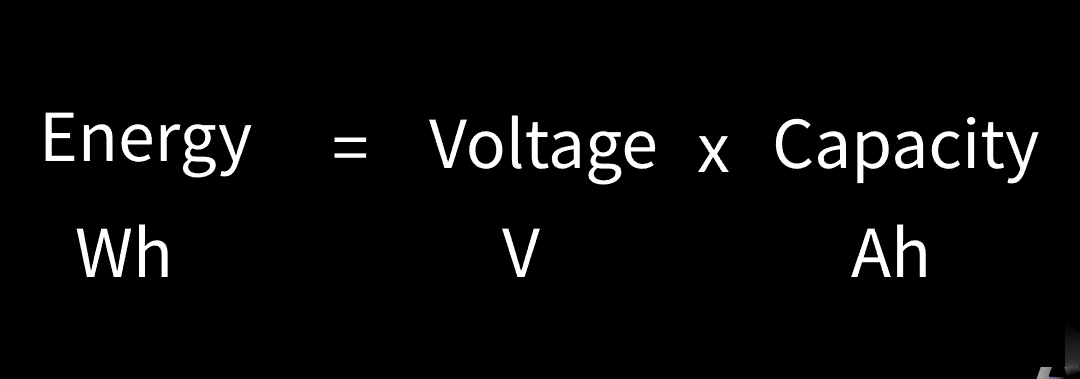
Are you intrigued by the nuances between watt hours (Wh) and amp hours (Ah) when it comes to gauging battery capacities and energy consumption? Navigating these metrics is pivotal for individuals dealing with electrical systems, from hobbyists to professionals. In this detailed blog post, we’ll dive into the definitions of watt-hours and amp-hours, explore the conversion methods between them, and unravel the scenarios where these calculations hold utmost significance.
A watt-hour serves as a unit of energy that equates to the power of one watt consumed over the duration of one hour. It stands as a measure of the energy a device utilizes over a specific period. Grasping watt-hours aids in estimating the duration a device can operate on a given amount of power.
In contrast, an amp-hour quantifies the capacity of a battery to supply a certain amount of current for a specified period. It denotes the total charge a battery can deliver consistently over the span of one hour.
Converting amp hours to watt hours involves a simple multiplication of the voltage by the amp-hour rating. The formula is straightforward: Watt Hours = Amp Hours × Volts. This conversion proves invaluable in estimating the total energy stored within a battery.
Conversely, converting watt hours back to amp hours entails dividing the watt-hour rating by the voltage. The formula stands as Amp Hours = Watt Hours ÷ Volts. This conversion becomes handy when you possess a watt-hour rating but necessitate the battery’s capacity in amp hours.
The watt-hour rating of a 100Ah lithium battery hinges on its voltage. For instance, a 12-volt 100 Ah lithium battery yields 1,200 watt-hours (Wh) of energy (100 Ah × 12V = 1,200 Wh). Always ensure to verify the battery’s voltage for an accurate calculation of its watt-hour capacity.
Use this chart to quickly find the energy capacity (Watt-hours) of your battery without doing the math.
| Battery Voltage | Amp Hours (Ah) | Energy (Watt Hours) | Common Application |
|---|---|---|---|
| 12V | 50 Ah | 600 Wh | Small Trolling Motor / Kayak |
| 12V | 100 Ah | 1,280 Wh | RV House Battery / Camping |
| 12V | 200 Ah | 2,560 Wh | Off-Grid Cabin / Solar |
| 12V | 300 Ah | 3,840 Wh | Large Marine System |
| 24V | 50 Ah | 1,280 Wh | Electric Wheelchair / Scrubber |
| 24V | 100 Ah | 2,560 Wh | Industrial AGV / Forklift |
| 24V | 200 Ah | 5,120 Wh | Home Energy Storage |
| 48V | 100 Ah | 5,120 Wh | Golf Cart (Standard) |
| 48V | 280 Ah | 14,336 Wh | Solar Wall Battery / Server Rack |
*Note: Calculations are based on nominal voltages (12.8V for LiFePO4, 25.6V, 51.2V). Formula: Wh = Ah × V
Comprehending the disparities between watt-hours and amp-hours holds paramount importance when designing or evaluating power systems, as well as when determining battery capacities for solar setups, choosing the suitable battery for an electric vehicle, or estimating the runtime of electronic devices. These calculations serve as the bedrock for making informed decisions regarding energy consumption and storage.
By assimilating the differences between watt-hours and amp-hours and mastering their conversions, you gain valuable insights into energy usage, battery capacities, and overall power management.
Feel free to bookmark this comprehensive guide for quick reference whenever you require clarity on watt-hour and amp-hour calculations. Proficiency in these concepts empowers you in a multitude of electrical and energy-related applications.
Edit by editor
Last Update:2026-01-15 11:30:51
All Rights reserved © 2026 Evlithium Limited