 |
Welcome To Evlithium Best Store For Lithium Iron Phosphate (LiFePO4) Battery |
 |
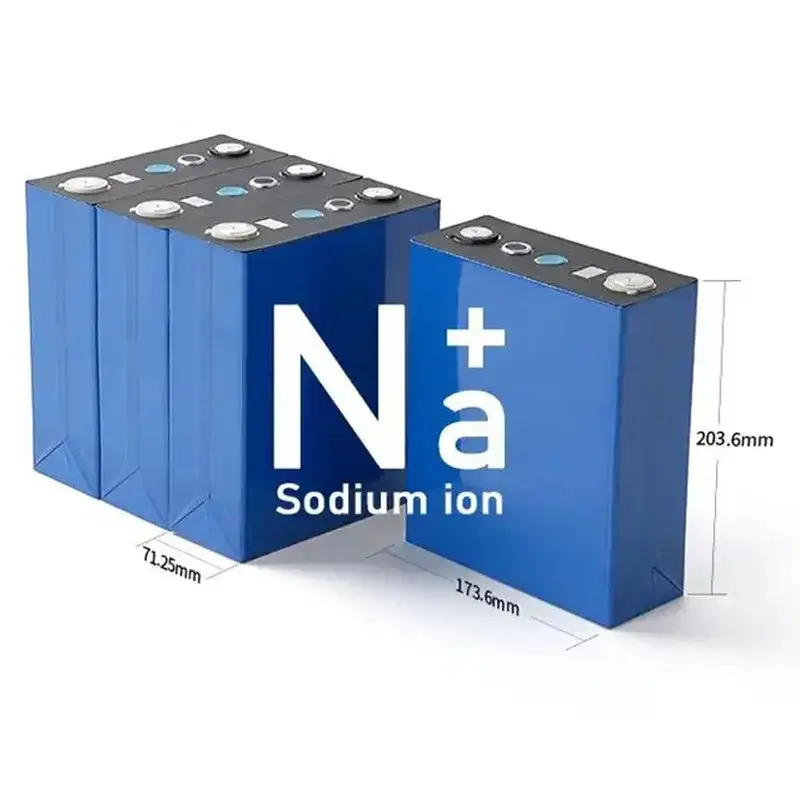
The rise of sodium-ion batteries has shifted from theoretical promise to tangible industrial momentum. Once viewed as a complementary alternative with advantages in cost, resource abundance, and low-temperature performance, sodium-ion technology is now entering a more pragmatic phase. With manufacturers pushing sodium-ion into energy storage systems, the key question emerges: can sodium-ion batteries challenge lithium iron phosphate (LFP)?
Sodium-ion batteries have evolved rapidly, reaching industrial-scale deployment. Recent developments include large-format cells exceeding 300Ah, energy densities near 160 Wh/kg, and cycle life beyond 15,000 cycles. These metrics signal a transition from experimental technology to practical application.
Unlike a single chemistry, sodium-ion batteries represent a flexible platform where performance depends on materials and system design.
Battery performance depends on multiple technical variables:
Layered oxides aim to maximize energy density, similar to lithium NMC systems. These materials use multi-metal compositions to optimize voltage and capacity.
Advantages:
Challenges:
Polyanionic materials provide strong structural stability and long cycle life, making them ideal for energy storage systems.
Advantages:
Limitations:
PBA materials feature an open framework structure that enables fast ion diffusion and strong low-temperature performance.
Advantages:
Challenges:
Hard carbon is currently the most viable anode material for sodium-ion batteries, offering a balance between capacity and manufacturability.
Advantages:
Key Challenges:
Hard carbon suffers from low initial coulombic efficiency, leading to irreversible sodium loss during the first cycle.
Pre-sodiation is essential to compensate for sodium loss and maintain full-cell performance.
High rates and low temperatures can cause polarization and reduced capacity.
Alloy materials offer higher theoretical capacity but face severe challenges in volume expansion and cycle stability.
Battery safety depends on system design, not just chemistry.
Thermal behavior resembles high-energy lithium batteries, with higher sensitivity to overcharge.
Offers strong thermal stability and reduced risk of thermal runaway.
Lower thermal runaway risk but potential toxic gas release must be managed.
| Metric | Sodium-Ion | LFP |
|---|---|---|
| Energy Density | 100–175 Wh/kg | 160–210 Wh/kg |
| Cycle Life | 2,000–15,000+ | 3,000–10,000+ |
| Low Temperature | Excellent (-40°C) | Moderate |
| Resource Dependency | No lithium required | Requires lithium |
Sodium-ion batteries are unlikely to fully replace LFP but will complement it across specific applications:
The future of batteries will not be dominated by a single chemistry. Sodium-ion batteries offer clear advantages in cost, resource availability, and cold-weather performance, while LFP maintains leadership in energy density and maturity.
Rather than replacement, the market will move toward coexistence—where each battery chemistry is deployed according to its strengths.
Edit by paco
Last Update:2026-05-03 18:37:51
All Rights reserved © 2026 Evlithium Limited