 |
Welcome To Evlithium Best Store For Lithium Iron Phosphate (LiFePO4) Battery |
 |
As Lithium iron phosphate battery (LiFePO4) batteries become increasingly popular in electric vehicles, solar energy storage systems, RVs, marine applications, power tools, and other equipment, proper end-of-life management is becoming more important.
Although LiFePO4 batteries are known for their excellent thermal stability, long cycle life, and relatively strong safety characteristics, they should never be treated like ordinary household waste. A battery that has reached the end of its useful life may still contain stored electrical energy and valuable recoverable materials.
The best options are generally to reuse the battery when it remains suitable for the application or send it to an appropriate battery recycling program. Proper handling can reduce waste, conserve resources, and minimize the risk of fires caused by improperly discarded lithium batteries.
Recycling LiFePO4 batteries provides environmental, economic, and safety benefits. Here are the main reasons responsible battery disposal matters.
A LiFePO4 battery contains materials that require energy and resources to extract and process. Recycling allows useful materials to be recovered and potentially returned to the manufacturing supply chain.
Instead of treating an old battery as worthless waste, recycling can turn part of the battery into a source of secondary raw materials. This approach supports a more circular battery industry and reduces dependence on newly extracted resources.
Battery manufacturing requires raw materials, energy, transportation, and industrial processing. Recovering materials from spent batteries can reduce the need to obtain all materials from primary sources.
The actual environmental benefit depends on the recycling technology and recovery efficiency, but responsible end-of-life management is an important part of improving the overall sustainability of rechargeable batteries.
Lithium batteries should not be placed in regular household garbage or mixed recycling bins.
Even when a LiFePO4 battery no longer powers a device effectively, it may retain electrical energy. Mechanical damage during garbage collection, transportation, sorting, or waste processing can create a short circuit and potentially cause a fire.
Recycling channels are designed to handle batteries through specialized collection, transportation, processing, and material recovery procedures.
Improperly discarded batteries can eventually become a waste-management problem. Damaged batteries may release electrolyte or other materials, while landfill disposal prevents potentially valuable battery materials from being recovered.
Keeping spent batteries within appropriate recycling systems helps prevent unnecessary environmental exposure and supports controlled treatment.
Fire safety is one of the most important reasons to avoid putting lithium batteries in ordinary garbage.
A damaged, crushed, punctured, or short-circuited lithium battery can generate heat. If several batteries are transported or compacted together in waste-processing equipment, the consequences can be serious.
For this reason, never assume that an apparently dead LiFePO4 battery is safe to throw away.
When a LiFePO4 battery reaches the end of its service life, there are three possible paths:
The regular household trash can should generally not be one of those options.
Before handling an old battery, inspect its condition. If it is swollen, cracked, leaking, unusually hot, severely damaged, or showing signs of physical deformation, avoid using or dismantling it yourself. Damaged lithium batteries require additional precautions and may need to be handled by a specialized recycling or hazardous-material service.
Yes. Recycling is not always the first step when a battery still has useful capacity and remains safe.
For example, an EV battery that no longer provides the performance required for vehicle use may still retain sufficient capacity for stationary energy storage. This concept is commonly referred to as second-life battery use or cascade utilization.
A LiFePO4 battery could potentially be reused for applications with lower power or energy requirements, depending on its state of health, internal resistance, remaining capacity, BMS condition, and overall safety.
However, second-life use should not mean simply connecting an old battery to another device. A professional assessment should determine whether the cells, BMS, enclosure, wiring, insulation, and protection systems remain suitable.
The safest approach is to locate a battery recycling service that explicitly accepts the type, size, and condition of your LiFePO4 battery.
Recycling requirements vary by country, state, municipality, and recycling provider. Some programs accept consumer rechargeable batteries, while others specialize in larger lithium battery packs used in electric vehicles, energy storage systems, industrial equipment, or commercial applications.
Before taking a battery to a collection point, check its acceptance requirements.
For consumers in North America, organizations such as Call2Recycle provide battery recycling information and collection resources. Large-format LiFePO4 battery packs may require a specialized recycling provider rather than a standard consumer drop-off location.
Local government waste-management departments can also provide information about household hazardous waste facilities and battery collection programs.
Mail-in recycling can be useful for people who do not have a convenient collection center nearby. Some recycling companies provide specially designed packaging and shipping instructions for eligible batteries.
However, do not simply put a lithium battery into a box and mail it without checking the shipping requirements. Lithium batteries are subject to transportation and packaging regulations, particularly when they are damaged, defective, or shipped in large quantities.
Always follow the recycling company's packaging and shipping instructions.
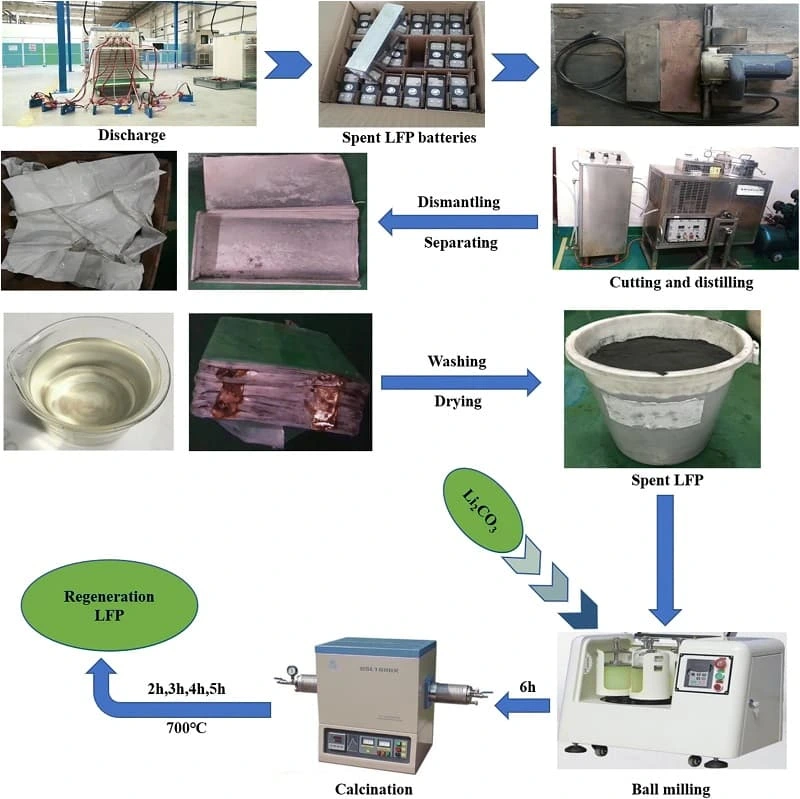
Professional LiFePO4 battery recycling generally involves several stages. The exact process varies according to the battery format and recycling technology.
A typical process may include:
Collection → Transportation → Inspection → Discharging or stabilization → Battery dismantling → Mechanical processing → Material separation → Material recovery
Recyclers may first inspect and sort batteries according to chemistry, condition, size, and design. Battery packs can then be dismantled so that components such as cells, wiring, circuit boards, housings, and other materials can be separated.
Specialized recycling technologies can subsequently process battery materials to recover useful substances. The objective is to return as much recoverable material as practical to productive use while safely managing residual waste.
Proper handling is just as important as choosing the right recycling channel.
Do not:
For removable batteries, preventing terminal-to-terminal contact during storage and transportation is an important precaution. Follow the recycling program's specific instructions for taping, packaging, and handling.
A damaged LiFePO4 battery requires extra caution.
If a battery is swollen, cracked, leaking, producing smoke, becoming abnormally hot, or showing other signs of failure, do not continue using or charging it.
Move people away from the area and avoid unnecessary handling. If there is an immediate fire or thermal event, contact the appropriate emergency service. For a damaged but stable battery, contact a qualified battery recycler or local hazardous-waste authority and tell them that the battery is damaged before transporting it.
Do not place a damaged battery into a normal collection box unless the operator has specifically confirmed that it accepts damaged batteries.
The best end-of-life option depends on the battery's condition.
A relatively healthy battery may be suitable for second-life applications after professional evaluation. A battery that has reached the end of its useful service life should generally enter an appropriate recycling stream.
The key principle is simple: don't treat a LiFePO4 battery as ordinary trash.
Responsible disposal protects waste workers, reduces unnecessary fire risks, keeps valuable materials in circulation, and supports a more sustainable battery supply chain.
Knowing how to dispose of and recycle LiFePO4 batteries is an important part of responsible battery ownership. Although LiFePO4 chemistry offers long service life and strong safety characteristics, an end-of-life battery still requires appropriate handling.
Whenever possible, consider whether the battery can safely receive a second life. If it cannot, use a qualified battery recycling or waste-management service that accepts LiFePO4 batteries.
Most importantly, never throw LiFePO4 batteries into ordinary household garbage, burn them, puncture them, or dismantle damaged packs yourself.
By choosing proper battery recycling and disposal methods, users can help reduce waste, conserve resources, support material recovery, and lower the risk of lithium battery fires throughout the waste-management system.
Edit by paco
Last Update:2026-08-27 10:41:42
All Rights reserved © 2026 Evlithium Limited