 |
Welcome To Evlithium Best Store For Lithium Iron Phosphate (LiFePO4) Battery |
 |
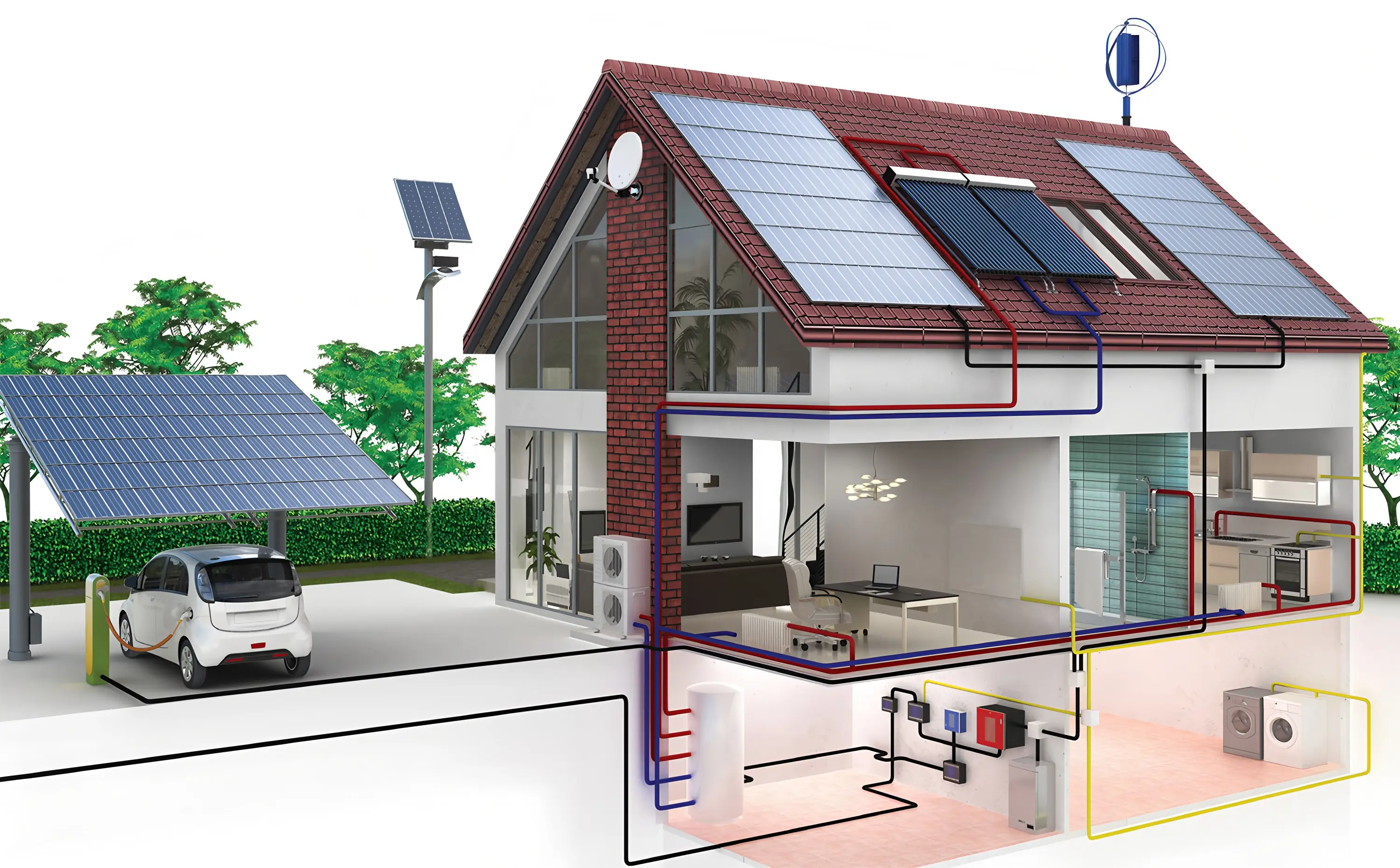
Residential solar energy systems offer homeowners an effective way to reduce electricity bills, improve energy independence, and make better use of renewable energy. However, solar panels do not always generate electricity when households need it most. Solar production typically peaks around midday, while residential electricity consumption often increases in the evening and at night.
This mismatch between energy generation and consumption makes battery storage an essential part of many modern solar installations. By storing excess electricity during the day, a home battery system allows homeowners to use stored energy when solar production decreases or electricity prices rise.
However, choosing the right battery chemistry is not always straightforward. Lead-acid, nickel manganese cobalt (NMC), and lithium iron phosphate (LiFePO4 or LFP) batteries offer different advantages in terms of cost, energy density, safety, operating temperature, and cycle life.
Understanding these differences is essential when selecting a residential solar battery that delivers reliable performance and long-term value.
Battery chemistry directly influences the performance, safety, and operating costs of a residential energy storage system. Although several technologies are available, lead-acid, NMC, and LiFePO4 remain important options for different applications.
Lead-acid batteries have powered backup systems and off-grid installations for decades. Their mature manufacturing processes and relatively low purchase prices make them attractive to budget-conscious buyers.
However, they have several disadvantages in applications requiring frequent charging and discharging.
Deep-cycle lead-acid batteries, including AGM and gel models, generally offer approximately 300–800 charge-discharge cycles under varying operating conditions. Their usable capacity is also relatively limited. Regularly discharging beyond 50% can significantly shorten their service life.
Other limitations include:
Relatively low energy density and considerable weight.
Longer charging times compared with lithium batteries.
Reduced efficiency during repeated cycling.
Greater maintenance requirements for certain battery types.
Shorter service life in demanding daily solar applications.
Lead-acid batteries may still suit occasional emergency backup systems, but their limitations make them less attractive for residential solar installations that require daily cycling.
NMC batteries use a cathode containing nickel, manganese, and cobalt. This chemistry offers high energy density, allowing manufacturers to produce compact and lightweight battery packs.
For applications where installation space and weight are major concerns, NMC technology offers significant advantages.
However, NMC batteries generally require more careful thermal management than LiFePO4 batteries. Their higher energy density and comparatively lower thermal stability can increase the consequences of overheating, internal short circuits, or improper charging.
Consequently, system designers must pay close attention to battery management systems, cooling arrangements, and installation safety.
NMC remains suitable for applications requiring compact energy storage, but it may not always be the most practical choice for stationary residential installations.
Lithium iron phosphate batteries have become a popular choice for residential solar energy storage because of their thermal stability, long cycle life, and excellent deep-discharge performance.
Unlike NMC batteries, LiFePO4 uses an iron phosphate cathode, which provides stronger thermal and chemical stability.
Key advantages include:
Long cycle life, commonly around 3,000–6,000 cycles or more, depending on operating conditions.
High usable depth of discharge.
Lower thermal runaway risk compared with many conventional lithium-ion chemistries.
Good performance across a relatively wide discharge temperature range.
Reduced weight compared with equivalent lead-acid battery banks.
Although LiFePO4 batteries generally have lower energy density than NMC batteries, this disadvantage is less important in fixed residential installations where space and weight are not major constraints.
|
Performance Factor |
Lead-Acid |
NMC |
LiFePO4 |
|---|---|---|---|
|
Cycle life |
300–800 cycles |
1,000–2,000 cycles |
3,000–6,000+ cycles |
|
Usable depth of discharge |
30–50% |
Typically up to 80% |
Up to 100%, depending on specifications |
|
Energy density |
30–50 Wh/kg |
200–250 Wh/kg |
120–160 Wh/kg |
|
Thermal stability |
Generally stable |
Lower than LFP |
High |
|
Weight |
Heavy |
Lightweight |
Lighter than lead-acid |
|
Maintenance |
Varies by type |
Relatively low |
Relatively low |
These figures are indicative rather than universal specifications. Actual performance depends on cell design, battery configuration, manufacturer specifications, and operating conditions.
Comparing battery specifications is only the first step. Homeowners should also consider how the battery will perform throughout its operating life.
The cheapest battery is not necessarily the most economical option.
Residential solar batteries typically charge and discharge regularly over many years. Therefore, evaluating the total cost of ownership is more useful than comparing initial purchase prices alone.
Consider the following factors:
Initial battery purchase cost.
Installation and electrical integration expenses.
Expected cycle life.
Round-trip energy efficiency.
Usable battery capacity.
Maintenance and replacement costs.
A battery with a higher purchase price but three or four times the cycle life of a cheaper alternative may deliver a lower cost per kilowatt-hour over its lifetime.
For this reason, LiFePO4 batteries can offer attractive long-term economics for households that regularly use stored solar electricity.
Temperature has a significant influence on lithium battery performance, charging efficiency, and service life.
LiFePO4 batteries generally support discharge temperatures of approximately -20°C to 60°C, depending on the manufacturer's specifications. However, charging below 0°C requires particular attention.
Charging lithium cells at temperatures below their permitted limits can cause lithium plating and irreversible cell damage.
Homeowners installing batteries in cold climates should consider:
Integrated battery heating systems.
Temperature monitoring.
Low-temperature charging protection.
Insulated battery enclosures.
Proper ventilation and environmental controls.
For outdoor installations, protection against moisture, excessive heat, and direct sunlight is equally important.
Safety should be a primary consideration when installing an energy storage system inside or near an occupied residential building.
LiFePO4 chemistry offers better thermal stability than conventional NMC chemistry, making it an attractive option for stationary applications.
Nevertheless, battery safety depends on more than cell chemistry.
A reliable residential battery system should include:
A properly designed battery management system (BMS).
Overcharge and over-discharge protection.
Overcurrent and short-circuit protection.
Cell temperature monitoring.
Cell voltage balancing.
Appropriate thermal management.
Correct installation and electrical protection.
Homeowners should also check relevant product certifications, installation requirements, and local electrical and fire safety regulations.
The physical dimensions of a battery system can influence the final chemistry selection.
For a conventional home installation, wall-mounted or floor-mounted batteries generally have sufficient installation space for LiFePO4 technology.
However, compact utility rooms, RVs, mobile energy systems, and small outbuildings may require batteries with higher energy density.
In these applications, NMC batteries can provide an advantage because they store more energy within a smaller physical volume.
The best choice ultimately depends on the available installation space, structural weight limitations, and required energy capacity.
A residential solar-plus-storage system combines several components to generate, convert, store, and distribute electricity.
The solar panels generate direct current (DC) electricity during daylight hours. An inverter converts this electricity into alternating current (AC) for household appliances.
When solar generation exceeds household consumption, the surplus electricity charges the battery instead of being immediately exported to the utility grid.
After sunset, the battery supplies stored electricity through the inverter, helping reduce grid consumption.
An energy management system coordinates electricity generation, battery charging, discharging, and household demand.
One frequently overlooked consideration is communication between the battery management system and the inverter.
A compatible communication connection allows the battery BMS to transmit important operating information, including:
State of charge (SOC).
Battery voltage and current.
Charging and discharging limits.
Temperature information.
Protection and fault signals.
CAN bus and RS485 are common communication interfaces used in residential energy storage systems.
Without proper communication, some inverter configurations rely primarily on battery voltage to estimate the remaining charge.
This approach can be unreliable with LiFePO4 batteries because their voltage remains relatively stable across much of their operating SOC range.
Consequently, voltage-only estimation may produce inaccurate SOC readings and unexpected system shutdowns.
|
Inverter Brand |
Communication Protocol |
Commonly Compatible BMS |
|---|---|---|
|
Deye / Sol-Ark |
CAN / RS485 |
Pylontech, Seplos, Pace |
|
Growatt |
CAN / RS485 |
Leadshow, Pace, Custom BMS |
|
Victron Energy |
VE.Can |
JK, Seplos, REC |
|
EG4 / Voltronic |
RS485 |
Pace, EG4 BMS |
Compatibility depends on the specific inverter model, firmware version, and BMS communication protocol. Some systems also require correct DIP switch configurations or customized communication settings.
Before purchasing a battery and inverter separately, always confirm that both devices support the same communication protocol and compatible parameter definitions.
Selecting the correct battery capacity is essential for balancing system costs and backup performance.
An oversized battery increases initial investment, while an undersized battery may fail to provide sufficient backup electricity.
A practical sizing method involves four steps.
Determine how much electricity your household uses during a typical day.
For example, if your daily electricity consumption is 10 kWh, use this figure as the starting point for battery sizing.
Decide how many days you want the battery to support your household without sufficient solar generation or grid electricity.
Many residential systems target one to three days of backup, depending on household requirements and available budget.
Battery rated capacity and usable capacity are not always identical.
For example, if you plan to use 80% of a battery's rated capacity, divide your required energy by 0.8.
Required Battery Capacity = Daily Energy Consumption × Backup Days ÷ Usable Capacity Ratio
For a household consuming 10 kWh per day and requiring two days of backup:
10 kWh × 2 ÷ 0.8 = 25 kWh
Therefore, the system requires approximately 25 kWh of nominal battery capacity.
For a 48V battery system, the approximate amp-hour capacity can be calculated using:
Battery Capacity (Ah) = Energy Capacity (Wh) ÷ System Voltage (V)
25,000 Wh ÷ 48 V = 520.8 Ah
The household would therefore need approximately 521 Ah at 48V, subject to actual system voltage, operating limits, and conversion losses.
|
Application |
Typical Battery Capacity |
|---|---|
|
Camping and small electronic devices |
1–2 kWh |
|
Emergency home backup |
3–5 kWh |
|
Small residential solar storage |
5–10 kWh |
|
Fully off-grid residential systems |
10 kWh or more |
These values provide general reference points. Actual requirements depend on appliance loads, peak power demand, backup duration, and seasonal solar generation.
Choosing the right chemistry is important, but proper battery maintenance also determines long-term performance.
Three factors deserve particular attention: temperature, humidity, and state of charge.
Keep batteries away from direct sunlight, heating equipment, and other sources of excessive heat.
A cool, dry, and well-ventilated installation environment helps reduce unnecessary thermal stress.
If a battery will remain unused for an extended period, avoid leaving it continuously at 100% SOC or completely discharged.
For the storage conditions described in the original battery guidance, approximately 40–50% SOC is a suitable target.
Always follow the battery manufacturer's recommended storage voltage, SOC, and maintenance intervals.
Check batteries that remain unused for extended periods at least monthly.
Look for warning signs such as:
Physical swelling or deformation.
Electrolyte leakage.
Damaged cables or connectors.
Unusual temperature changes.
Battery management system alarms.
Periodic inspections help identify potential problems before they affect the entire energy storage system.
Consider a residential solar installation in Germany that adds a 15 kWh LiFePO4 battery to an existing photovoltaic system.
Before installing the battery, the household purchased approximately 430–480 kWh of electricity from the grid each month.
During the first six months after commissioning, monthly grid purchases decreased to approximately 180–220 kWh.
This represents an estimated reduction of 1,400–1,700 kWh over six months, equivalent to approximately 50–60% lower grid electricity consumption.
Although actual results vary according to weather conditions, household consumption, system configuration, and electricity management strategies, this example illustrates how battery storage can improve solar energy utilization.
Selecting the right battery chemistry requires balancing purchase price, energy density, safety, cycle life, installation conditions, and long-term operating costs.
Lead-acid batteries remain a relatively inexpensive option for basic backup applications, but their limited cycle life and usable capacity make them less attractive for daily solar energy storage.
NMC batteries offer excellent energy density and compact dimensions, making them suitable for installations where space and weight are critical considerations.
LiFePO4 batteries, meanwhile, provide an attractive combination of long cycle life, thermal stability, and deep-discharge capability. These characteristics make them particularly suitable for fixed residential solar energy storage systems.
However, battery chemistry alone does not determine overall system performance. Correct battery sizing, inverter compatibility, BMS communication, temperature management, and installation quality are equally important.
For homeowners planning a long-term solar energy storage investment, a properly engineered LiFePO4 battery system is often a practical solution that balances safety, reliability, and lifetime value.
Edit by paco
Last Update:2026-11-03 11:26:21
All Rights reserved © 2026 Evlithium Limited