 |
Welcome To Evlithium Best Store For Lithium Iron Phosphate (LiFePO4) Battery |
 |
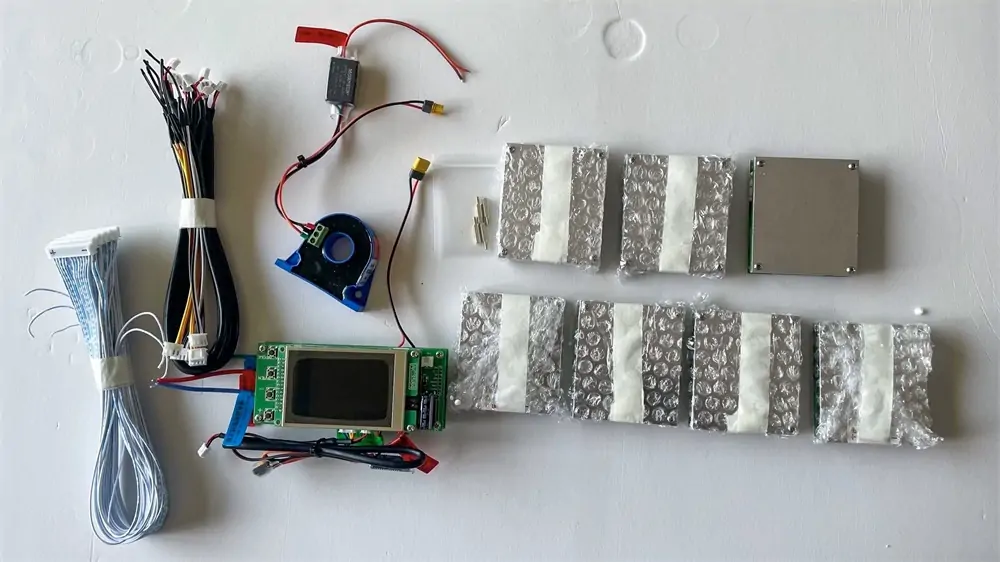
The rapid growth of electric vehicles and energy storage systems has made the Battery Management System (BMS) one of the most critical technologies in modern battery packs. Often described as the “brain” of the battery,” a BMS does far more than simple monitoring. It ensures safety, optimizes performance, and extends the lifespan of lithium battery systems.
In electric vehicles, renewable energy storage, and industrial battery applications, the design quality of a BMS directly affects battery efficiency, reliability, and safety. This article provides a comprehensive overview of BMS core functions, hardware modules, and mainstream system architectures, helping engineers and industry newcomers understand the key design principles behind advanced battery management systems.
A Battery Management System (BMS) is an electronic system responsible for monitoring, controlling, and protecting rechargeable battery packs. It collects real-time data from battery cells, analyzes performance parameters, and ensures the battery operates within safe limits.
Modern BMS technology is widely used in:
Electric vehicles (EVs, HEVs, PHEVs)
Renewable energy storage systems
Industrial energy storage solutions
Electric tools and micromobility devices
UPS and backup power systems
Without a properly designed BMS, lithium batteries could suffer from overcharging, overheating, capacity imbalance, or even thermal runaway, leading to severe safety risks.
A well-designed BMS performs several critical tasks to ensure battery safety and performance. The most important responsibilities can be divided into four major functions.
The first and most fundamental role of a BMS is continuous battery monitoring. Much like a nervous system in the human body, the BMS constantly gathers key parameters from every cell in the battery pack.
Typical parameters monitored include:
Individual cell voltage
Cell temperature
Pack current
Total battery voltage
Using these measurements, the BMS runs sophisticated algorithms such as:
Coulomb Counting
Kalman Filtering
Model-based estimation
These calculations determine critical battery metrics including:
SOC (State of Charge) – remaining battery capacity
SOH (State of Health) – battery aging level
SOP (State of Power) – maximum deliverable power
These parameters provide essential data for vehicle control systems and energy management strategies.
Safety is the top priority in battery system design. Lithium batteries must operate within strict electrical and thermal limits to prevent dangerous conditions.
A BMS protects the battery pack by detecting abnormal situations such as:
Overcharging
Over-discharging
Overcurrent
High or low temperature
Short circuits
To mitigate risks, BMS systems typically combine hardware protection circuits and software control algorithms.
Hardware protections include:
Fuses
Contactors or relays
Circuit breakers
Software protection mechanisms limit charge/discharge current and isolate the battery if dangerous conditions occur. When the system detects a critical fault, the BMS can disconnect the battery pack within milliseconds, preventing thermal runaway and ensuring system safety.
Lithium battery packs consist of many cells connected in series and parallel. Due to manufacturing tolerances and environmental differences, cells rarely age at the same rate.
Over time, some cells may have slightly higher or lower capacities than others. This imbalance can reduce the usable energy of the entire battery pack — a phenomenon often referred to as the “barrel effect.”
To address this issue, BMS systems use cell balancing technology.
Two common balancing methods include:
Passive balancing dissipates excess energy from higher-voltage cells through resistors. Although simple and inexpensive, this method converts energy into heat, reducing overall efficiency.
Active balancing redistributes energy from stronger cells to weaker ones using capacitors, inductors, or DC-DC converters. This method significantly improves energy efficiency but increases circuit complexity and cost.
Balancing helps extend battery life and maintain consistent performance across the entire pack.
Modern battery systems are highly integrated within broader electrical systems. A BMS must communicate with other controllers and external networks.
Common communication protocols include:
CAN Bus
CAN FD
LIN
Through these networks, the BMS exchanges data with components such as:
Vehicle Control Unit (VCU)
Onboard chargers
Energy management systems
In advanced applications, BMS systems also support remote monitoring through 4G, 5G, Bluetooth, or cloud platforms, enabling real-time diagnostics and OTA (Over-the-Air) updates.
A modern BMS hardware system typically consists of several functional modules working together to ensure safe and reliable battery operation.
The Analog Front End (AFE) acts as the sensing interface of the BMS.
Its main responsibilities include collecting:
Cell voltages
Temperature readings from NTC thermistors
Pack current measurements via shunt resistors or Hall sensors
AFE chips must deliver high measurement accuracy and strong electromagnetic interference resistance because battery packs operate in electrically noisy environments.
The Microcontroller Unit (MCU) serves as the central processor of the BMS.
It typically runs on high-performance processors such as:
ARM Cortex-R series
DSP processors
The MCU performs tasks including:
Data processing
SOC and SOH calculation
Fault diagnostics
Control command execution
Many modern BMS platforms run real-time operating systems like AUTOSAR or FreeRTOS to manage complex system tasks.
The balancing circuit ensures voltage consistency across battery cells. Depending on system design requirements, the module may implement:
Passive balancing resistors
Active energy transfer circuits
Capacitor-based balancing
Inductor-based balancing
DC-DC converter balancing systems
This module plays a key role in maximizing battery lifespan.
The communication module handles both internal and external data exchange.
Internal communication allows the main controller to communicate with distributed monitoring units using:
CAN bus
Daisy-chain communication
External communication connects the BMS with other system controllers and remote networks.
The high-voltage control system acts as the power interface of the BMS.
Its responsibilities include controlling:
Main positive and negative contactors
Pre-charge circuits
High-voltage relays
The module also performs critical safety checks such as:
Insulation resistance detection
High Voltage Interlock Loop (HVIL) monitoring
These functions ensure that high-voltage battery systems operate safely and reliably.
BMS designs typically follow one of two architectures depending on system size, cost, and performance requirements.
In a centralized BMS, all monitoring, control, and protection functions are integrated into a single control unit.
The controller directly connects to each battery cell through wiring harnesses.
Lower hardware cost
Simpler design
Compact structure
Lower reliability due to single point of failure
Complex wiring harnesses
Poor scalability for large battery packs
Higher electromagnetic interference risk
Centralized BMS systems are typically used in:
Electric tools
Two-wheel electric vehicles
Low-speed EVs
Small battery systems under 20 series cells
A distributed BMS divides system functions between a master controller and multiple slave modules.
BMU (Battery Management Unit) – central control unit
CSC (Cell Supervision Circuit) – module-level monitoring units
Each CSC monitors a battery module locally and communicates with the master controller via a daisy-chain or CAN network.
Higher reliability
Modular design
Excellent scalability
Reduced wiring complexity
Improved electromagnetic compatibility
Higher hardware cost
More complex communication management
Distributed BMS architectures are widely used in:
Electric passenger vehicles
Hybrid vehicles
Large commercial energy storage systems
Grid-scale battery storage
Selecting the appropriate BMS architecture depends on application requirements.
For example:
48V mild hybrid systems or e-bikes often use centralized BMS solutions because of their lower cost.
Long-range electric vehicles and megawatt-scale energy storage systems rely on distributed BMS architectures to achieve higher safety, scalability, and maintainability.
There is no universally superior design. The best architecture is always the one that matches the application’s technical and economic requirements.
As battery technology continues to evolve, BMS systems are also becoming more advanced.
Several emerging trends are shaping the future of battery management.
Wireless BMS technology replaces traditional wiring harnesses with wireless communication. This reduces vehicle weight, simplifies battery pack design, and improves space utilization.
Next-generation BMS platforms integrate AI and machine learning algorithms to improve battery diagnostics and lifespan prediction.
These systems can analyze large datasets to deliver more accurate SOH estimation and predictive maintenance capabilities.
Future BMS designs may merge with other vehicle control systems such as:
Power Distribution Units (PDU)
Vehicle Control Units (VCU)
This integration supports domain controller architectures in next-generation electric vehicles.
The Battery Management System is the central intelligence of modern battery packs. By monitoring cell conditions, protecting against faults, balancing energy, and coordinating system communication, the BMS ensures safe and efficient battery operation.
While centralized BMS architectures remain popular in small battery applications due to their simplicity and cost advantages, distributed BMS systems have become the industry standard for electric vehicles and large energy storage solutions because of their superior scalability and reliability.
As energy storage technology advances, BMS systems will continue evolving toward wireless communication, AI-driven analytics, and deeper integration with vehicle electronics, making them even more critical to the future of electrification and renewable energy systems.
Edit by paco
Last Update:2026-03-07 10:07:37
All Rights reserved © 2026 Evlithium Limited