 |
Welcome To Evlithium Best Store For Lithium Iron Phosphate (LiFePO4) Battery |
 |
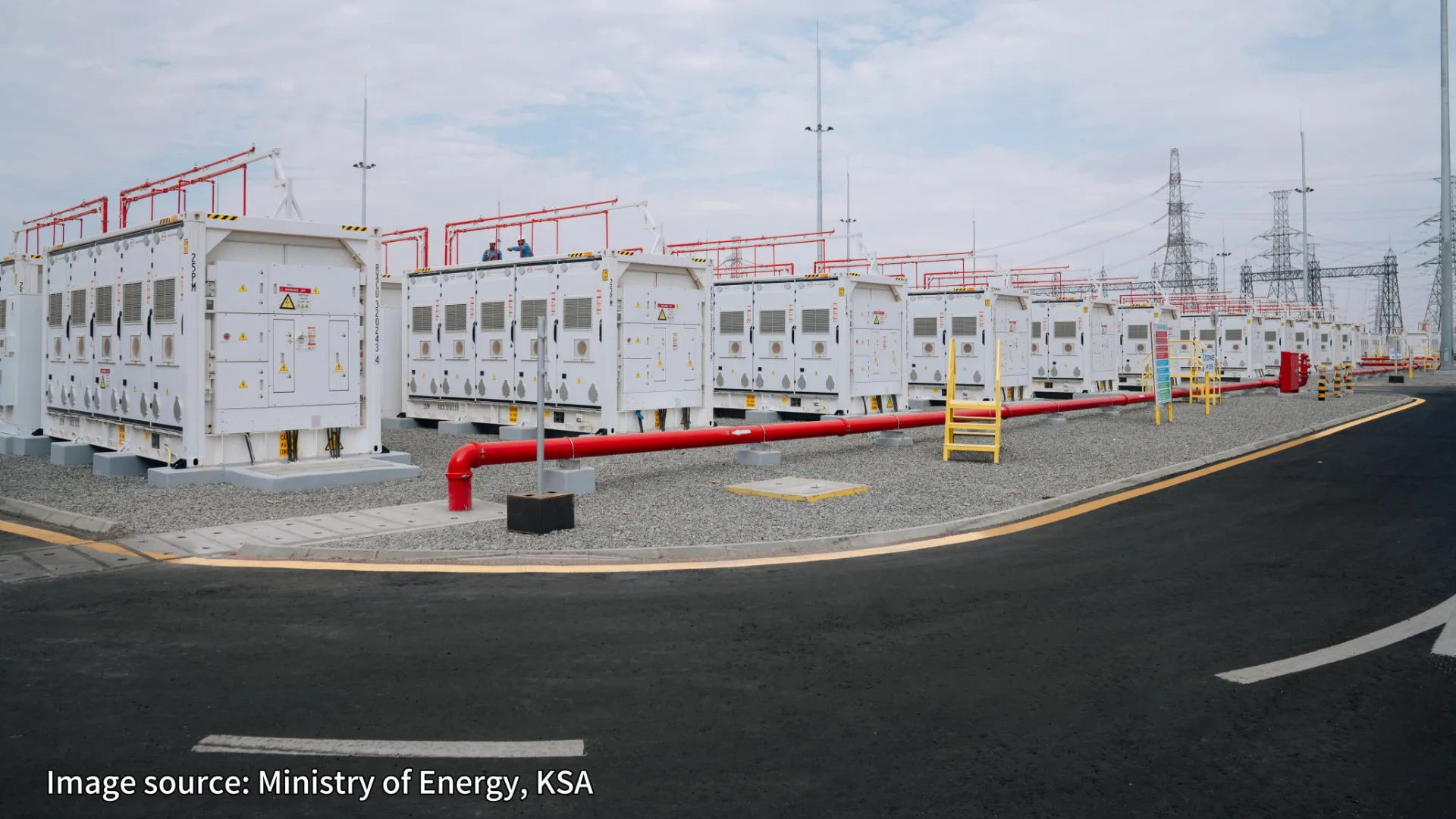
The 2.6GWh Bisha Battery Energy Storage Project in Saudi Arabia has successfully connected to the grid, relying heavily on infrastructure supplied by BYD Energy Storage. As Saudi Arabia pursues its Vision 2030 objective to generate 50% of its electricity from renewable sources and position itself as a major green energy hub, this newly connected facility represents the largest single-phase grid-connected energy storage project in the world to date.
For this milestone initiative, BYD supplied all energy storage equipment operating below the 33kV threshold. This deployment included 488 units of the company's 5.365MWh MC Cube Energy Storage System (ESS). By integrating these systems, the Bisha project establishes a new operational standard for energy storage in the Middle East, advancing domestic energy transitions and furthering international renewable energy partnerships in the region.
Situated in Saudi Arabia's Asir Province, the Bisha facility is designed to deliver a stable power supply to the grid for up to four hours during peak demand. The core of this capacity relies on BYD’s MC Cube ESS, which utilizes the manufacturer's Cell to System (CTS) integration technology alongside its proprietary Blade Battery design. According to technical specifications, this setup achieves a Volume Ratio of Cell to System (Vcts) exceeding 33%.
The hardware utilizes an ultra-thin battery configuration that allows for dense, three-dimensional spatial arrangements within the housing. When combined with its unique structural design, the system significantly reduces the overall number of necessary internal components, thereby increasing space utilization and energy density within the storage units.
At the operational level, the system's Battery Management System (BMS) continuously monitors battery health and status in real-time. It incorporates standard industry safety mechanisms to mitigate common risks such as overcharging, over-discharging, and thermal runaway, ensuring overall site stability. Furthermore, intelligent management software enables the facility to store electricity during off-peak periods and discharge it during peak demand, stabilizing the local grid. The modular nature of the technology offers inherent scalability, allowing grid operators to adjust capacity based on fluctuating infrastructure requirements.
Following the successful integration of the Bisha project, BYD Energy Storage has continued to expand its involvement in the region's rapidly growing energy sector. The company recently secured a separate agreement with the Saudi Electricity Company for a new 12.5GWh grid-side energy storage project, recognized as one of the largest planned deployments globally. When combined with the operational 2.6GWh Bisha site, BYD's total contractual capacity in the country now reaches an unprecedented 15.1GWh.
Industry observers note that executing these ultra-large-scale projects requires substantial supply chain capability and logistical coordination. BYD's role in the region involves overseeing rigorous quality control, high-volume manufacturing, complex logistics, and on-site commissioning to meet strict international utility standards. The capacity to reliably deliver massive energy infrastructure within tight timelines has solidified the manufacturer's position as a major turnkey supplier in the highly competitive global energy storage market.
The operational status of the Bisha Battery Energy Storage Project serves as a key indicator of the feasibility of large-scale battery integration in national grids. As global energy demands shift toward renewables, collaborations between sovereign utility providers and major technology manufacturers are expected to play a critical role in standardizing sustainable energy grids worldwide.
Edit by paco
Last Update:2026-03-06 09:16:54
All Rights reserved © 2026 Evlithium Limited